




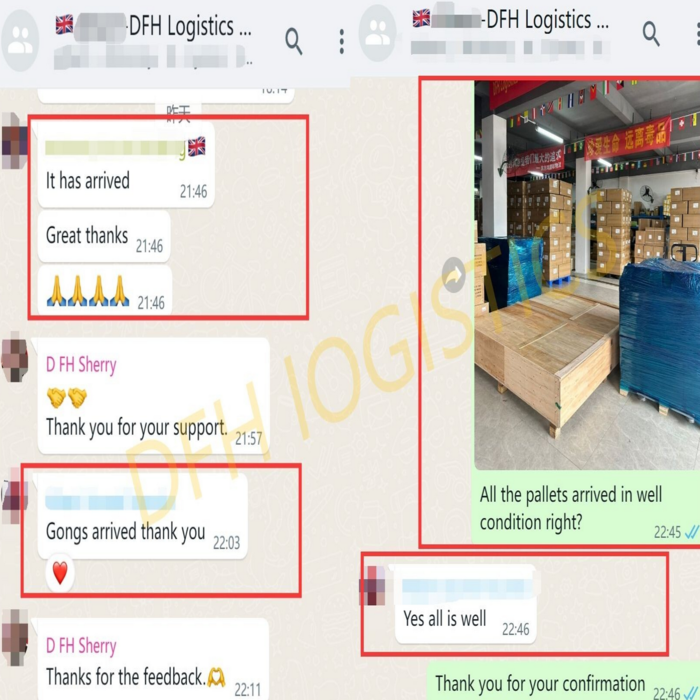
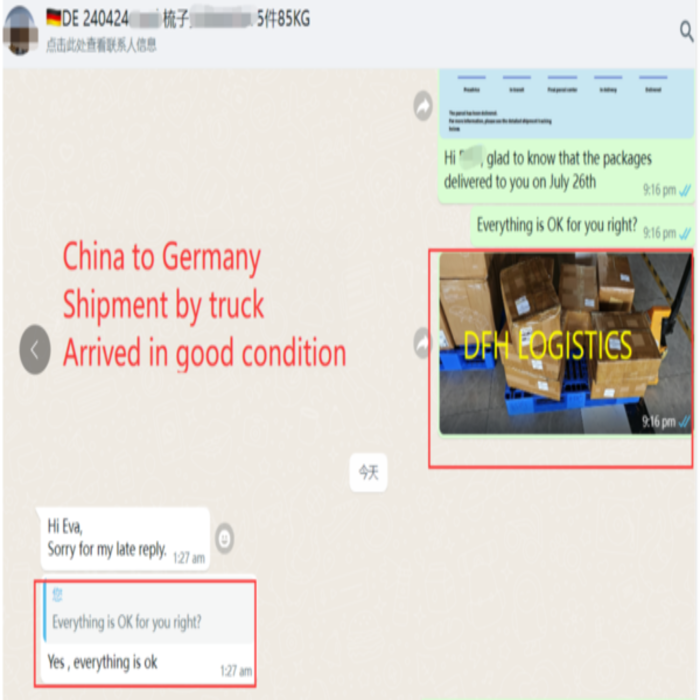
Discover tailored shipping solutions for every need, from China to the UAE. Whether it's air, sea, express, or multimodal transport, our comprehensive services ensure efficient, cost-effective, and timely deliveries, simplifying your entire logistics process.
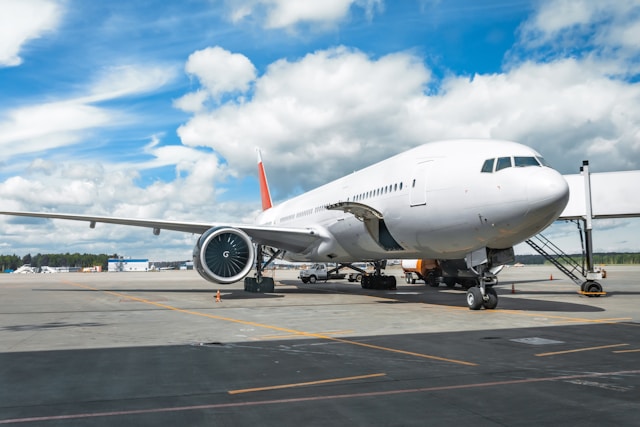
Ideal for urgent, high-value goods needing quick delivery AIRPORT TO AIRPORT, DOOR-TO-DOOR shipping from China to USA, 2-8 Working days delivery with carefully selected carriers
Fast and efficient door-to-door Express Shipping Solutions from China to the USA for smaller, time-sensitive packages.Shipped by FedEx, UPS, DHL, DPD, 2-5 work days delivery time
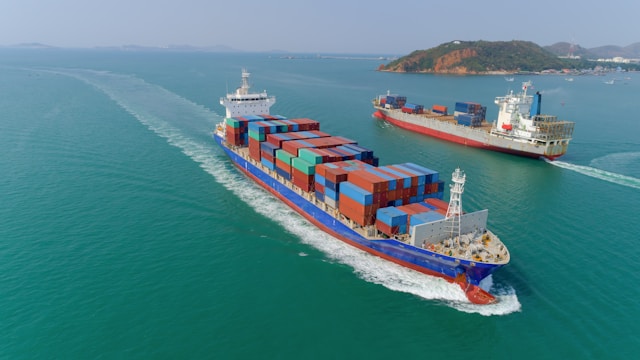
Affordable and efficient for larger, bulk shipments with flexible options.FCL and LCL both available. Can by DOOR TO DOOR and PORT TO PORT services. 20-25days fast sea freight.
Get Best Rates
Your Best Freight Forwarder from China to UAE
Transparent, No Hidden Fees
13+ Years of Expertise
24/7 Customer Support
Customized Shipping Solutions
Free Warehousing & Consolidation
Affordable Cargo Insurance Options
Comprehensive Customs & Compliance
Flexible Payment Terms Available
Real-Time Tracking & Updates
Contact now
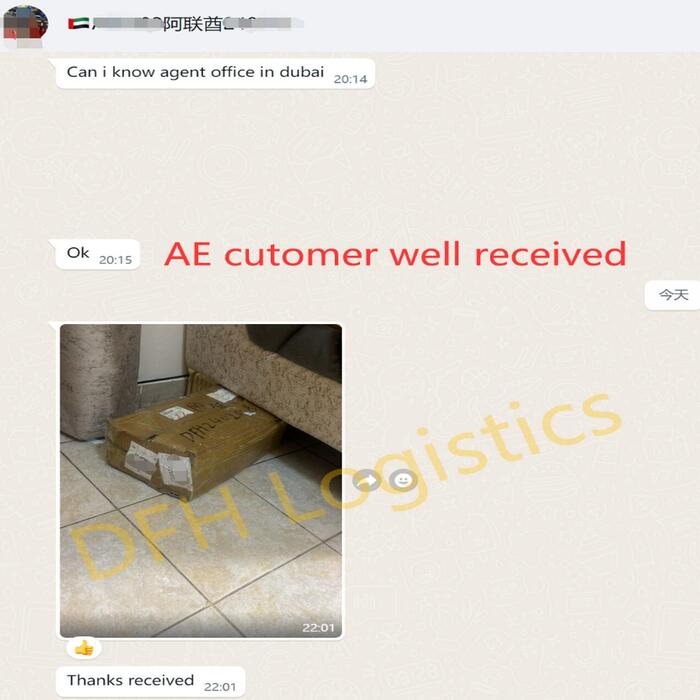
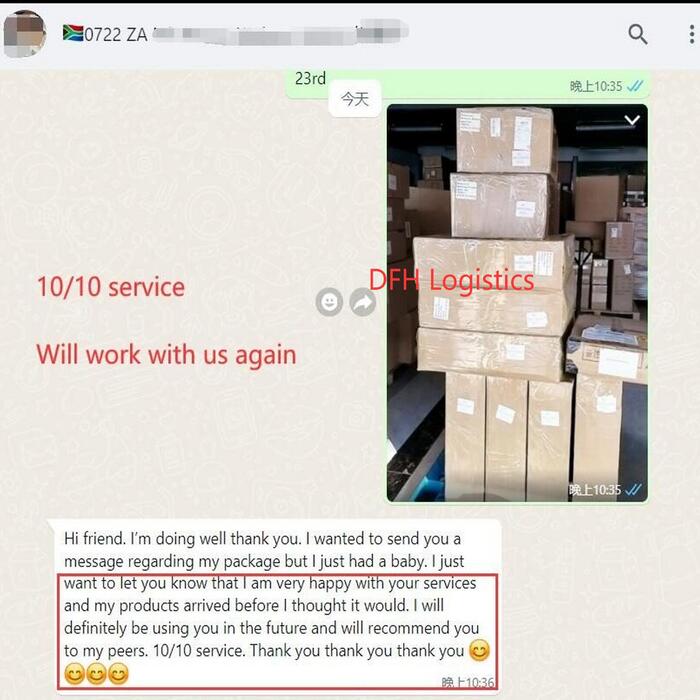
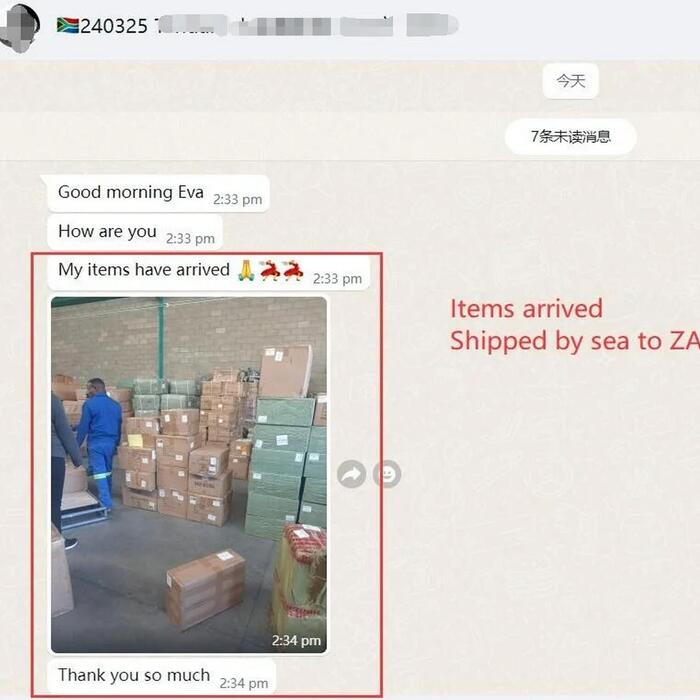
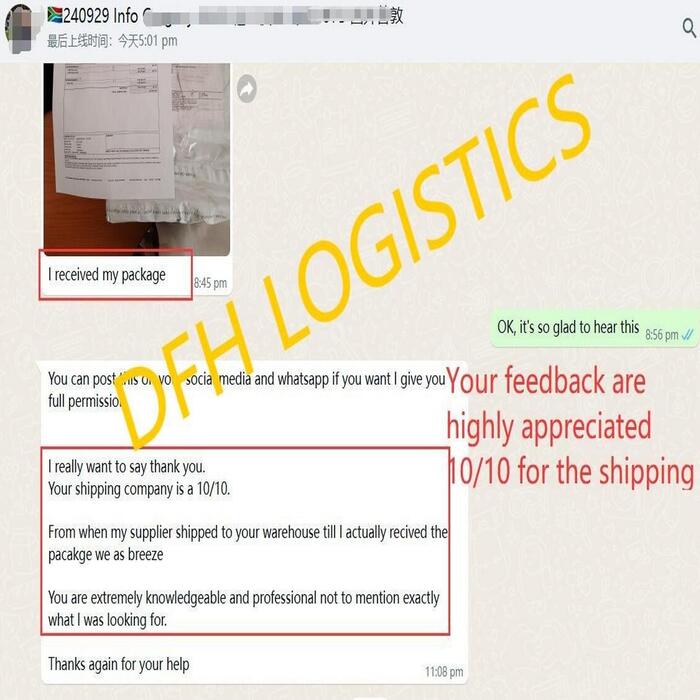
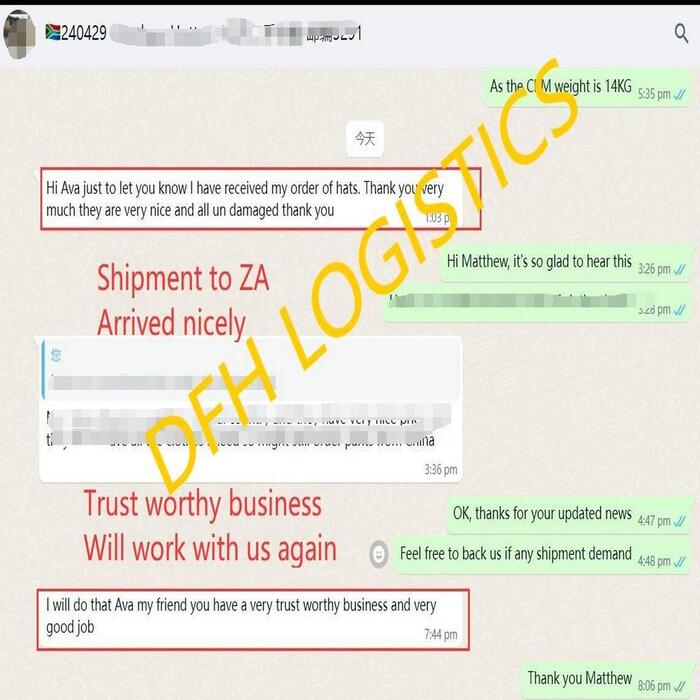
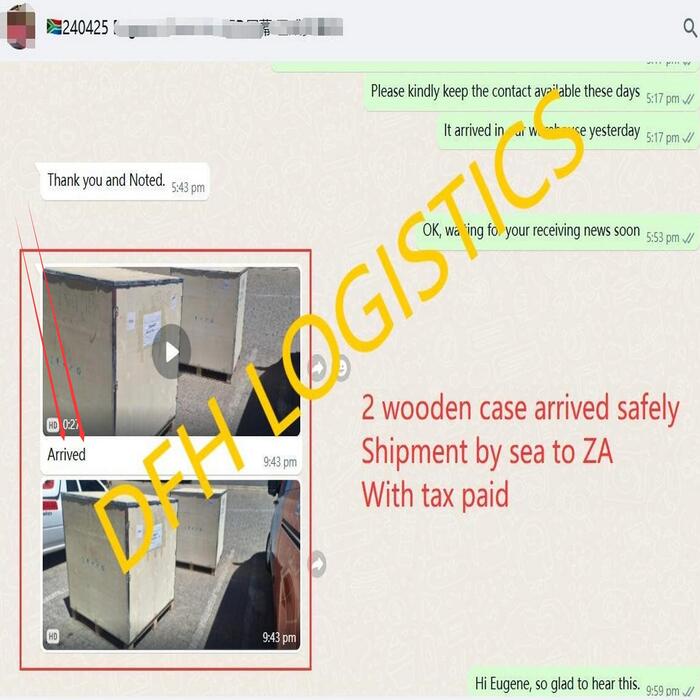
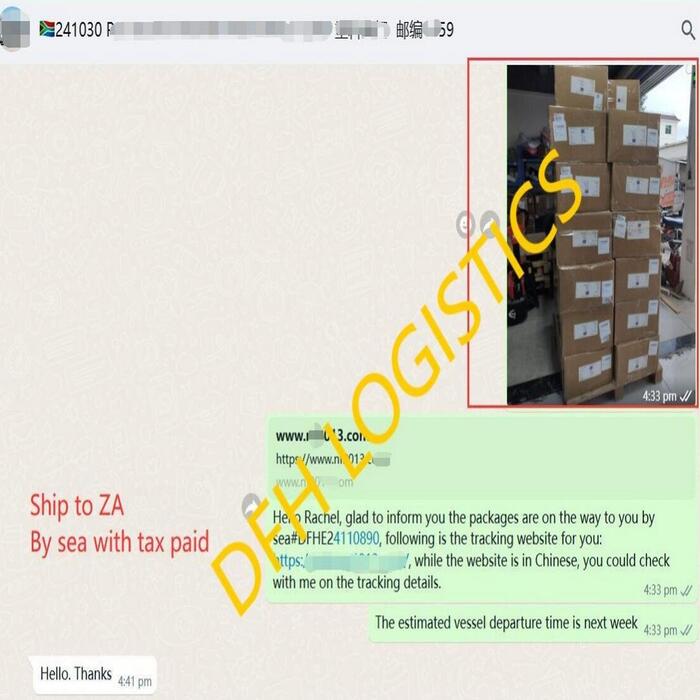
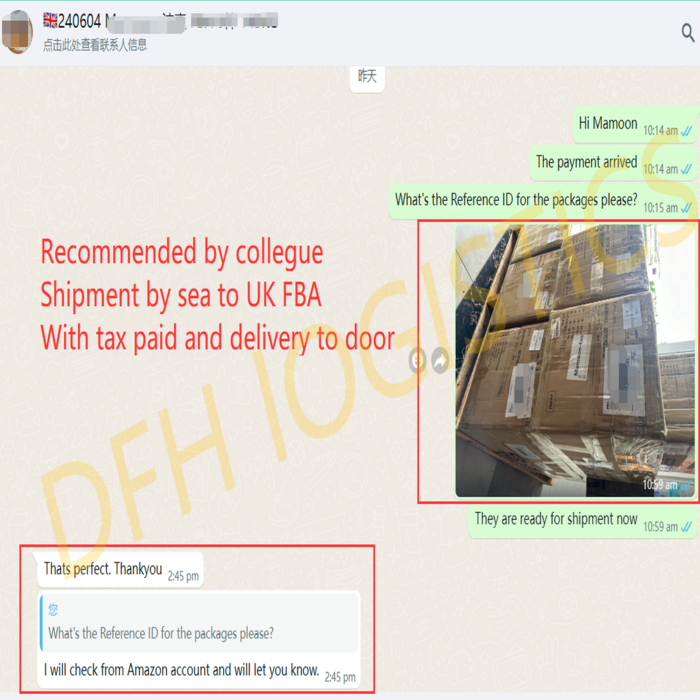
What Our Clients Say
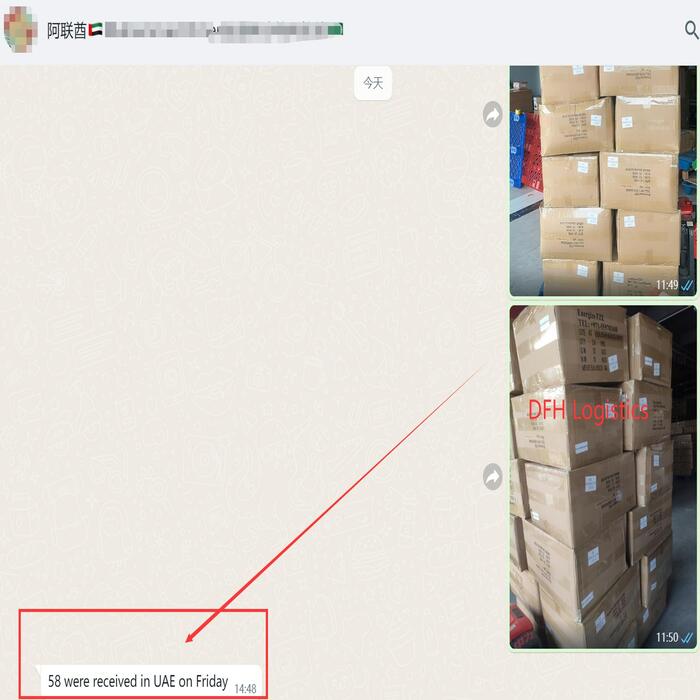
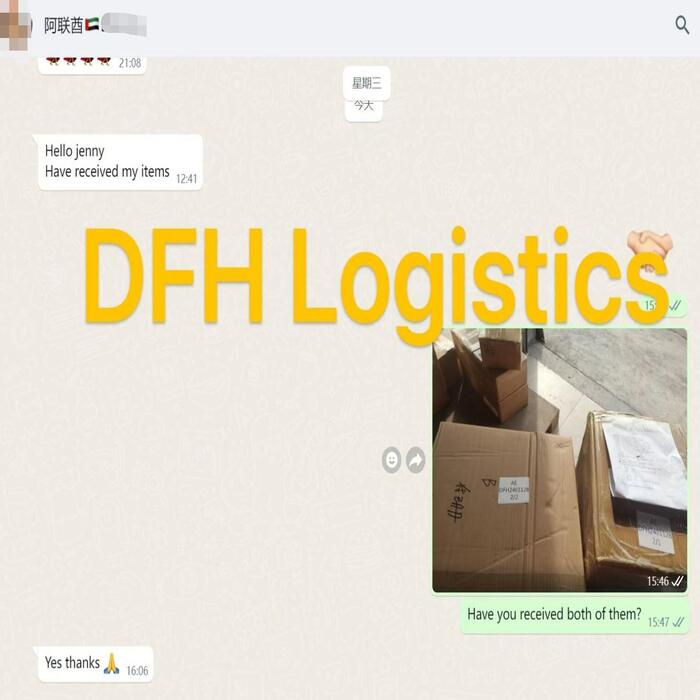
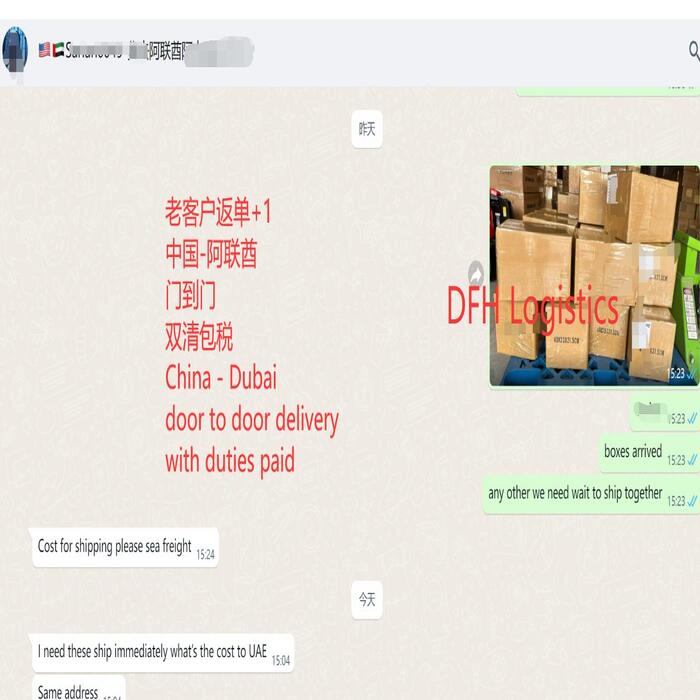
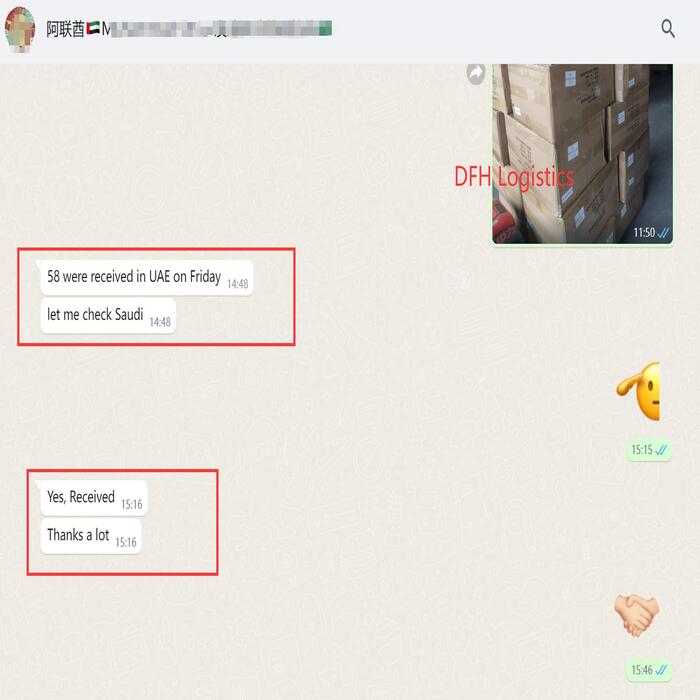
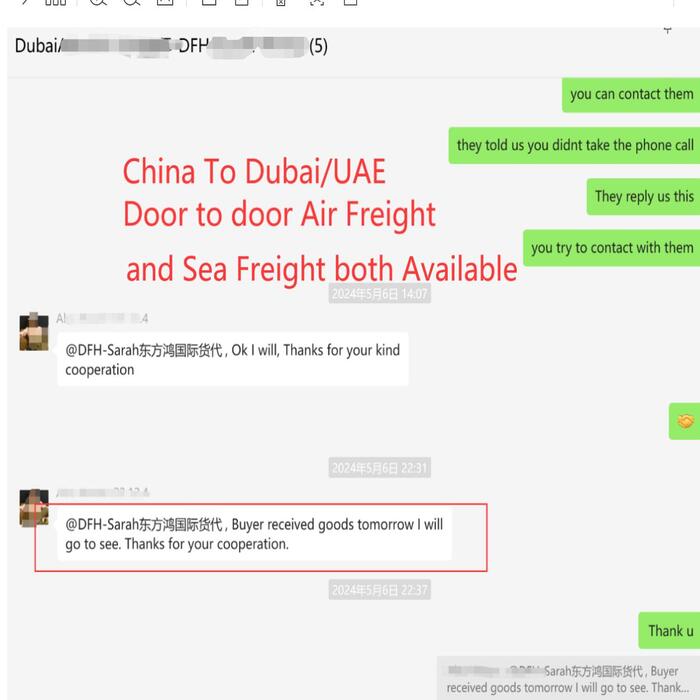
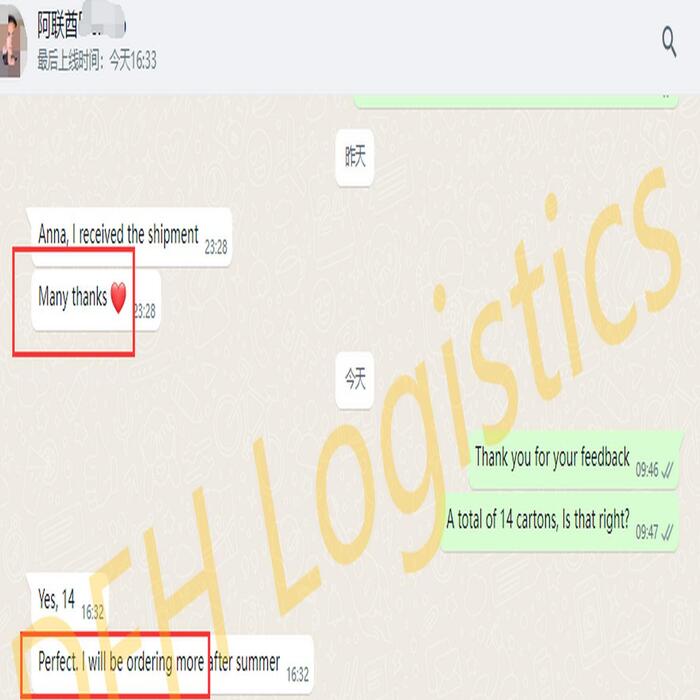
DFH’s services have simplified logistics, earning trust and referrals from our clients.
Get a free quoe
How Our China to UAE Shipping Process Works
Step 1
Pick-Up in China We’ll arrange pick-up directly from your supplier in China.
Step 2
Freight Preparation DFH handles all packaging, labeling, and weight confirmation.
Step 3
Documentation & Customs Our team completes all export and import documents for smooth customs clearance.
Step 6
Final Delivery Get door-to-door delivery or pick up locally, based on your preference.
Step 5
UAE Customs Clearance We manage import customs, duties, and taxes when goods arrive in the UAE.
Step 4
International Transit Choose the best shipping solution based on your time and budget needs.
Shipping from China to UAE: (2024) Everything You Need to Know
Shipping goods from China to the UAE is an essential step for businesses and individuals importing products. Choosing the right shipping method ensures your cargo arrives safely, quickly, and cost-effectively. This guide will explore your options, their advantages, and why partnering with a trusted freight forwarder like DFH Logistics can make the process seamless.
What are the 3 Shipping Options from China to UAE?

When importing goods from China to the UAE, there are three main options to consider. These options differ in terms of cost, transit time, and the level of involvement required. Below, we break them down and explain why working with your own China freight forwarder often provides the best balance of efficiency and cost.
Shipping directly by Chinese Supplier
When using your Chinese supplier for shipping, the supplier handles everything from product preparation to freight arrangements. This option can seem convenient, but it has notable drawbacks.
Advantages: Minimal involvement for the buyer, as the supplier manages all logistics.
Disadvantages: Limited control over carrier choice, lack of transparency in costs, and potential delays if the supplier prioritizes other shipments.
This method is suitable for small shipments or when cost is not a primary concern, but it may not provide the flexibility or reliability needed for larger or time-sensitive orders.
Shipping directly by UAE Local Freight Forwarder
Some businesses choose to engage a UAE-based freight forwarder to coordinate shipping from China. The UAE-based forwarder manages logistics with Chinese suppliers and arranges delivery to the UAE.
Advantages: Familiarity with UAE regulations and customs processes.
Disadvantages: Limited presence in China, which can lead to miscommunication, higher costs, and reliance on third-party services in China.
While UAE-based forwarders excel at local delivery, they often lack the on-ground expertise in China to streamline the entire process efficiently.
Shipping by Your Own China Freight Forwarder
Partnering with your own freight forwarder based in China, like DFH Logistics, offers the most comprehensive and cost-effective solution. This option ensures end-to-end control, transparency, and tailored services to meet your specific needs.
Advantages: Full control over shipping, detailed updates, cost-saving options, and seamless coordination from supplier pickup to UAE delivery.
Disadvantages: Requires selecting a reliable partner, but once chosen, it eliminates most logistics headaches.
For businesses seeking efficiency and reliability, this method is the best choice. A trusted China freight forwarder combines local expertise with global logistics capabilities, ensuring a smooth shipping experience.
What are the shipping methods from China to UAE?
Shipping from China to UAE involves multiple transportation options tailored to different shipment sizes, timelines, and budgets. The main methods include air freight, sea freight, express shipping, and DDP shipping. Below, we detail each method, their benefits, and when to use them.
Air freight from China to UAE: Pros and Cons
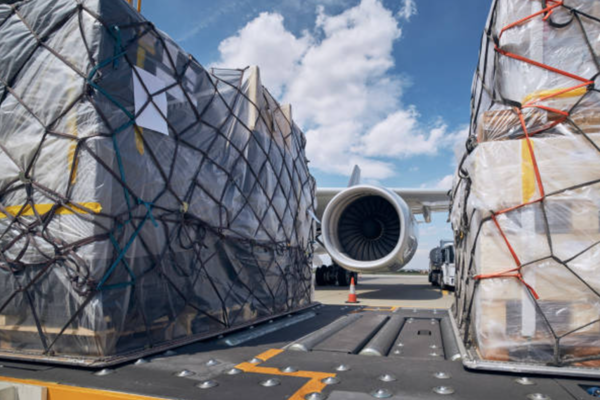
Air freight is one of the fastest and most efficient ways to ship goods from China to the UAE. It is ideal for urgent shipments or high-value items requiring quick transit. Let’s explore its specific services below.
Air freight port to port in UAE
Air freight port-to-port service involves shipping goods from an airport in China to a designated airport in the UAE.
Advantages:
Fast transit time (1–3 days depending on direct or transit flights).
Cost-effective for medium-sized, time-sensitive shipments.
Disadvantages:
Requires local customs clearance and transportation arrangements after arrival.
May incur additional fees for storage at the destination airport if not picked up promptly.
Best for: Businesses with local expertise in handling customs and onward logistics.
Air freight door to door in UAE
This service provides end-to-end logistics, picking up shipments from a Chinese supplier and delivering them directly to the recipient’s address in the UAE.
Advantages:
Hassle-free process with customs clearance and final delivery handled by the forwarder.
Perfect for businesses or individuals unfamiliar with local customs requirements.
Disadvantages:
Higher cost compared to port-to-port shipping.
Less flexibility for arranging your own delivery services.
Best for: Individuals or businesses seeking convenience and a single point of contact.
Sea freight from China to UAE: FCL vs. LCL
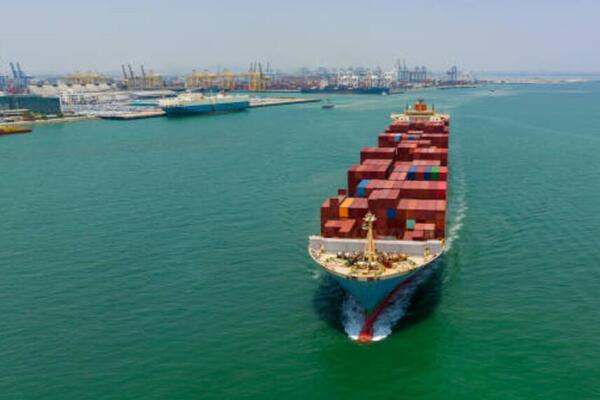
Sea freight is a cost-effective shipping method for large or heavy goods. Depending on the shipment size, you can choose between Full Container Load (FCL) and Less than Container Load (LCL). Let’s dive deeper into these two options.
FCL Shipping from China to UAE
FCL involves booking an entire container for your goods, providing exclusive use of the space.
Advantages:
Lower cost per unit for large volumes.
Reduced risk of damage, as no cargo sharing is involved.
Disadvantages:
Higher upfront cost if shipping smaller loads.
May require additional warehousing at the destination if goods are not distributed immediately.
Best for: Businesses with bulk shipments that fill or nearly fill a container.
LCL Shipping from China to UAE
LCL allows businesses to share container space with other shipments, paying only for the space used.
Advantages:
Cost-effective for smaller shipments.
Flexible scheduling options.
Disadvantages:
Higher risk of delays due to consolidation at origin and deconsolidation at destination.
Increased handling may lead to higher chances of damage.
Best for: Small businesses or individuals with shipments not large enough to fill a container.
Express Shipping from China to UAE: Is It Worth It?
Express shipping is the fastest option for sending goods from China to the UAE. Though it is more expensive, it’s perfect for small, time-critical shipments. Popular providers include DHL, FEDEX, and UPS.
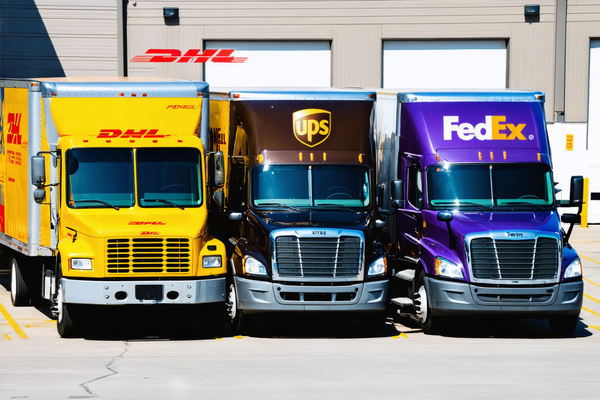
DHL Express from China to UAE
DHL offers fast and reliable delivery with comprehensive tracking services.
Advantages: Wide network and guaranteed delivery timelines.
Disadvantages: Premium pricing for urgent shipments.
Best for: E-commerce businesses with small but high-value products.
FEDEX Express from China to UAE
FedEx specializes in shipping larger parcels quickly and efficiently.
Advantages: Tailored services for oversized goods.
Disadvantages: Higher rates for expedited delivery.
Best for: Medium to large-sized businesses needing reliable international shipping.
UPS Express Shipping from China to UAE
UPS provides competitive pricing and reliable delivery for urgent shipments.
Advantages: Strong customs expertise.
Disadvantages: Limited availability in remote regions.
Best for: Businesses requiring cost-effective express shipping.
DDP Shipping from China to UAE

DDP (Delivery Duty Paid) shipping is one of the most convenient and comprehensive logistics solutions for transporting goods from China to the UAE. This method includes shipping, customs clearance, and tax payment, ensuring your shipment reaches its final destination without any extra hassle. For businesses and individuals unfamiliar with customs regulations or wanting a simplified process, DDP shipping is the best choice. Let’s explore the two primary DDP options: Air Freight DDP and Sea Freight DDP.
Air Freight DDP Shipping from China to UAE
Air Freight DDP is a fast and reliable option for shipping goods with comprehensive logistics services, including customs clearance and tax payment. Goods are picked up from the supplier’s location in China and delivered directly to the recipient in the UAE.
Advantages:
Speed: Transit times are as fast as 3–5 days, making it ideal for urgent or high-value shipments.
Convenience: All customs and duty requirements are managed, reducing the workload for the importer.
Reliability: End-to-end tracking ensures full visibility throughout the process.
Disadvantages:
Cost: Due to the speed and services included, Air Freight DDP is more expensive than other options.
Weight limitations: Best suited for small to medium-sized shipments, as costs rise significantly for heavier cargo.
Best for: Time-sensitive shipments, such as electronics, fashion items, or other high-value goods requiring a quick and secure delivery.
Sea Freight DDP Shipping from China to UAE
Sea Freight DDP is a cost-effective option for shipping large or bulky goods from China to the UAE. This service includes picking up goods from the supplier, handling customs clearance, and paying import duties, with final delivery to the recipient’s address.
Advantages:
Cost-efficiency: Sea freight offers lower costs compared to air freight, especially for bulk shipments.
Comprehensive service: Importers don’t need to manage customs or pay duties separately.
Suitable for large volumes: Ideal for heavy or oversized shipments that would be costly via air freight.
Disadvantages:
Slower transit time: Shipping typically takes 20–30 days, which might not suit urgent deliveries.
Best for: Businesses shipping large quantities of goods, such as furniture, industrial equipment, or other heavy items, where cost savings outweigh the longer delivery time.
What Ports in UAE Can You Ship to from China?
Shipping goods from China to the UAE offers multiple options for entry points, whether you are using air freight or sea freight. The UAE boasts world-class infrastructure with major airports and seaports that streamline the import process. Below, we list the key airports and seaports where your shipments can arrive.
Major Airports in UAE
When shipping by air freight, the following airports in the UAE are commonly used for imports:
Airport Name
City
IATA Code
Special Features
Dubai International Airport
Dubai
DXB
One of the busiest cargo hubs in the world.
Abu Dhabi International Airport
Abu Dhabi
AUH
Offers integrated logistics for air cargo.
Sharjah International Airport
Sharjah
SHJ
Known for its proximity to industrial and logistics hubs.
Al Maktoum International Airport
Dubai South
DWC
Handles large-scale cargo shipments with advanced facilities.
Major Sea Ports in UAE
For sea freight shipments, the UAE features some of the most prominent seaports in the Middle East:
Port Name
City
Special Features
Jebel Ali Port
Dubai
Largest container port in the Middle East.
Khalifa Port
Abu Dhabi
State-of-the-art deepwater port with advanced facilities.
Port Rashid
Dubai
Handles cruise and general cargo shipments.
Port of Fujairah
Fujairah
Only multi-purpose port on the UAE’s east coast.
Khor Fakkan Container Terminal
Sharjah
Specializes in transshipment cargo.
Both air and sea options offer flexibility and connectivity for different shipment needs. Choosing the right port depends on factors like shipment size, urgency, and your recipient’s location in the UAE.
Which Documents Do You Need to Prepare When Shipping from China to UAE?
Shipping goods from China to the UAE involves several critical documents to ensure smooth customs clearance and compliance with regulations. Proper preparation of these documents minimizes delays, prevents penalties, and ensures a hassle-free logistics process. Below is a list of the essential documents you’ll need and tips on how to prepare them.
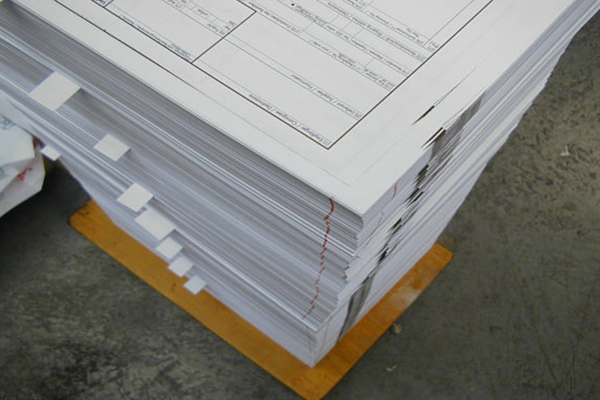
Essential Documentation for Shipping from China to the UAE
Commercial Invoice
This is a detailed invoice provided by the seller, outlining the goods being shipped, their value, and terms of sale.
Packing List
A document listing the contents of each package, including weight, dimensions, and quantities. This is crucial for customs inspection.
Bill of Lading (BOL) or Airway Bill (AWB)
For sea freight: The Bill of Lading acts as a contract between the shipper and carrier.
For air freight: The Airway Bill serves the same purpose for air shipments.
Certificate of Origin
This certifies that the goods were manufactured or produced in China and is often required to qualify for preferential duties.
Import License
Depending on the nature of the goods, the importer in the UAE may need a specific license to receive the shipment.
Customs Declaration Forms
These forms provide details of the shipment for customs authorities in both China and the UAE.
Inspection Certificate (if applicable)
For certain regulated goods like electronics, machinery, or food products, an inspection certificate may be mandatory.
Proforma Invoice (for pre-shipping quotes)
While not mandatory for customs, this document is often required for initiating payments or confirming orders.
Insurance Certificate
Proof of cargo insurance to cover damages or loss during transit, which is highly recommended for high-value shipments.
How to Prepare These Documents
If you’re unsure about preparing these documents, here are some tips to simplify the process:
Ask your Chinese supplier for assistance: Most suppliers are familiar with export documentation and can provide key documents like the Commercial Invoice, Packing List, and Certificate of Origin.
Work with your China freight forwarder: A reliable freight forwarder, like DFH Logistics, can help you prepare, review, and submit all necessary documentation. They also ensure compliance with both Chinese and UAE customs regulations.
By leveraging the expertise of your supplier or freight forwarder, you can avoid common mistakes and ensure your shipment reaches the UAE smoothly and efficiently.
What Products Can Be Imported from China to UAE?
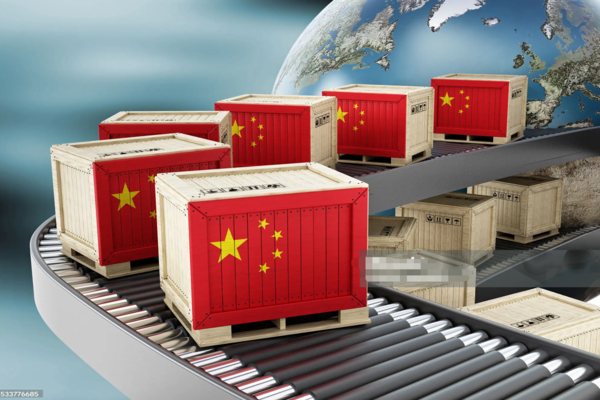
The UAE is one of the largest importers of goods from China, thanks to its thriving trade market. A wide range of products can be imported, but importers should also be aware of restrictions and prohibited items to avoid complications. Below, we list common imports and items that are restricted or prohibited.
Common Products Imported from China to UAE
Category
Examples
Electronics
Mobile phones, laptops, TVs, and accessories.
Textiles and Apparel
Clothing, footwear, and fabric.
Furniture
Home and office furniture, décor items.
Building Materials
Tiles, sanitary ware, and construction equipment.
Machinery and Tools
Industrial equipment and power tools.
Household Goods
Kitchenware, appliances, and utensils.
Toys and Baby Products
Dolls, educational toys, and baby gear.
Automotive Parts
Car accessories, tires, and spare parts.
Beauty Products
Cosmetics, skincare, and haircare items.
E-commerce Goods
General merchandise for reselling.
These products are among the most frequently imported goods from China to the UAE due to their affordability and demand in the region.
Prohibited and Restricted Items for Shipping to the UAE
While many products can be imported, there are strict rules regarding certain goods. Below are some items prohibited or restricted from shipping to the UAE:
Category
Examples
Prohibited Items
Drugs, narcotics, counterfeit currency, weapons, and explosives.
Restricted Items
Alcohol (requires a special license), live animals, ivory, and certain chemicals.
Tips for Compliance
Check UAE Customs Guidelines: Always verify the latest regulations for prohibited and restricted goods.
Coordinate with Your Supplier or Freight Forwarder: Suppliers and experienced freight forwarders like DFH Logistics can help ensure your shipment complies with UAE import laws.
Being aware of both opportunities and restrictions ensures a smooth importing process from China to the UAE.
How Long Does It Take to Ship from China to UAE?
Understanding the shipping times from China to the UAE is crucial for planning your logistics and meeting delivery deadlines. The transit time depends on the shipping method chosen—air, sea, express, or DDP—and other external factors. Here’s a detailed breakdown of shipping durations for each mode of transport.

Estimated Shipping Times by Transport Mode
Shipping Method
Estimated Time
Best For
Air Freight (Direct Flight)
1–2 days
Urgent shipments, high-value goods.
Air Freight (Transit Flight)
3–5 days
Non-urgent air shipments.
Sea Freight (FCL)
20–25 days
Large, bulk shipments needing cost savings.
Sea Freight (LCL)
25–30 days
Smaller shipments with shared container use.
Express Shipping
2–5 days
Small, time-sensitive packages.
DDP (Air Freight)
5–8 days
Quick delivery with customs handled.
DDP (Sea Freight)
25–35 days
Cost-effective, all-inclusive shipping.
Factors That Affect Shipping Times from China to UAE
Shipping Method
The choice of transport significantly impacts transit time. Air freight is the fastest, while sea freight typically takes longer due to maritime routes.
Port Congestion
During peak seasons or unexpected delays, congestion at Chinese or UAE ports can extend shipping durations.
Customs Clearance
Efficient documentation speeds up customs processing. Errors or incomplete documents may cause significant delays.
Weather Conditions
Adverse weather, such as typhoons or storms, can disrupt air and sea schedules, leading to delays.
Route and Carrier Availability
Direct shipping routes and well-established carriers tend to offer quicker delivery, while transit flights or shared containers (LCL) may add extra time.
Holidays and Peak Seasons
Chinese New Year, Ramadan, and other peak seasons can slow down production, transportation, and port operations.
By choosing the right shipping method and preparing well for potential delays, you can minimize disruptions and ensure timely delivery of your goods.
What Is the Best Shipping Method from China to UAE?
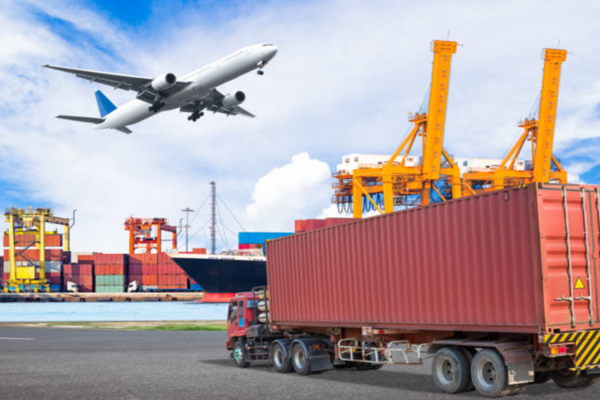
Choosing the best shipping method depends on your priorities: speed, cost, or convenience. Air freight is ideal for urgent deliveries, sea freight is great for bulk shipments, and DDP shipping is perfect for those who prefer a hassle-free experience. Here’s a brief overview:
Air Freight: Best for urgent, high-value shipments with short deadlines.
Sea Freight: Best for cost-efficient transportation of heavy or large goods.
DDP Shipping: Best for complete convenience, including customs and tax handling.
What Is the Cheapest Shipping Method from China to UAE?
Sea freight is generally the most cost-effective option, especially for large shipments. By choosing LCL (Less than Container Load) shipping, you only pay for the container space you use. However, for smaller shipments, DDP sea freight can also offer competitive pricing while including customs and tax services.
Factors That Influence Shipping Costs:
Shipment Size and Weight: Heavier and larger shipments benefit from sea freight.
Urgency: Non-urgent shipments can save costs with slower methods.
Additional Services: Options like customs handling (e.g., DDP) may increase costs but save time and effort.
How to Do the Customs Clearance from China to UAE?
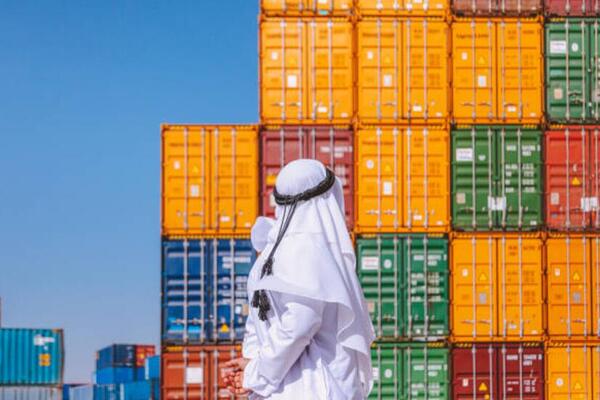
Customs clearance is a critical step when shipping goods from China to the UAE. It involves submitting the necessary documents, paying applicable duties, and adhering to regulations. Here’s the process:
Prepare Documentation:
Ensure all required documents are accurate, including:
Commercial Invoice
Packing List
Bill of Lading or Airway Bill
Certificate of Origin
Import License (if applicable)
Submit to Customs:
File the documents with Chinese customs for export and UAE customs for import. This step may involve inspections.
Pay Duties and Taxes:
The importer is typically responsible for paying duties and taxes, unless DDP shipping is used.
Receive Goods:
Once cleared, the shipment can be released for delivery.
Tip: To simplify the process, work with a freight forwarder like DFH Logistics. They handle customs clearance efficiently and ensure compliance.
Who Pays for Customs When Importing from China to the UAE?
The responsibility for customs duties depends on the terms agreed upon between the buyer and seller. Here are the common scenarios:
Buyer Pays (DAP or EXW Terms):
Under Delivered at Place (DAP) or Ex Works (EXW) terms, the buyer is responsible for paying duties and taxes in the UAE.
Seller Pays (DDP Terms):
Under Delivered Duty Paid (DDP) terms, the seller handles customs clearance and pays all duties and taxes before delivery.
How to Decide?
Choose DDP shipping for convenience and a stress-free experience.
Choose DAP or EXW if you have the expertise to handle customs clearance and want more control over the process.
By understanding your shipping terms and responsibilities, you can avoid unexpected costs and delays.
How Much Duties and Taxes Should You Pay for Importing Goods to the UAE?

When importing goods from China to the UAE, understanding the applicable duties and taxes is essential for budgeting and ensuring compliance with customs regulations. The UAE generally applies a 5% customs duty on most imported goods, along with a 5% Value Added Tax (VAT) calculated on the total value of the shipment, including shipping costs and customs duty.
While these rates cover the majority of goods, some products may have exceptions or additional requirements based on UAE customs policies. Always check the latest regulations or consult your freight forwarder for precise calculations.
Example of Duties and Taxes for Common Goods
Product Category
Customs Duty
VAT (5%)
Applicability
Electronics
5%
5% of total value
Laptops, mobile phones.
Furniture
5%
5% of total value
Chairs, tables, and décor.
Apparel and Textiles
5%
5% of total value
Clothing, footwear, fabric.
Industrial Equipment
5%
5% of total value
Machinery and tools.
Beauty Products
5%
5% of total value
Skincare, cosmetics.
Note: Total value includes the cost of goods, shipping charges, and insurance, as declared on the Commercial Invoice.
Tips for Accurate Duty and Tax Calculation
Check Product HS Codes: Use the Harmonized System (HS) Code for your goods to identify their specific customs duty rate.
Work with a Freight Forwarder: A logistics expert like DFH Logistics can help calculate duties and taxes accurately based on UAE customs requirements.
Avoid Under-Declaration: Ensure your declared values match the true cost of goods to avoid fines or shipment delays.
By understanding the basics of duties and taxes, you can better manage your logistics costs and ensure smooth customs clearance when importing goods into the UAE.
Which Incoterms Are Good for Shipping Goods from China to UAE?
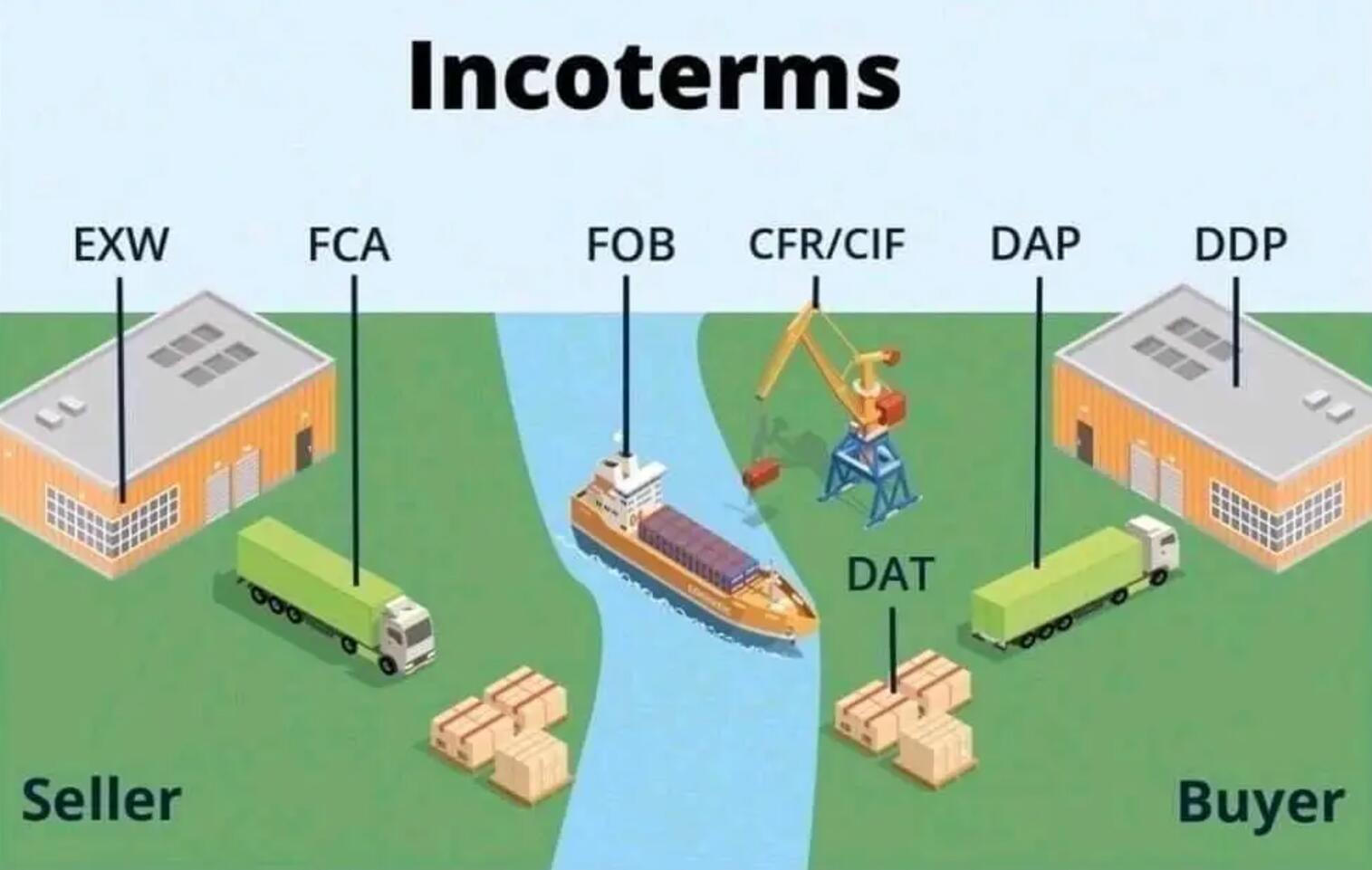
Selecting the right Incoterm is vital to define responsibilities and costs between you and your supplier when shipping from China to the UAE. Here are the commonly used Incoterms:
Recommended Incoterms for UAE Shipments
EXW (Ex Works)
What it means: The buyer assumes all responsibility for shipping from the supplier’s location in China.
Best for: Experienced importers who can manage the entire logistics process.
FOB (Free on Board)
What it means: The seller delivers goods to the port of shipment, while the buyer takes over shipping from there.
Best for: Importers seeking balanced responsibilities between buyer and seller.
CIF (Cost, Insurance, and Freight)
What it means: The seller covers shipping and insurance until the goods arrive at the destination port.
Best for: Buyers preferring risk coverage during transit.
DDP (Delivered Duty Paid)
What it means: The seller handles all logistics, customs clearance, and tax payments until delivery to the buyer’s door.
Best for: Beginners or those seeking convenience.
Pro Tip: If you’re new to importing, start with DDP to avoid dealing with customs and taxes. DFH Logistics specializes in managing DDP shipments seamlessly.
Do I Have to Buy Cargo Insurance When Shipping from China to UAE?
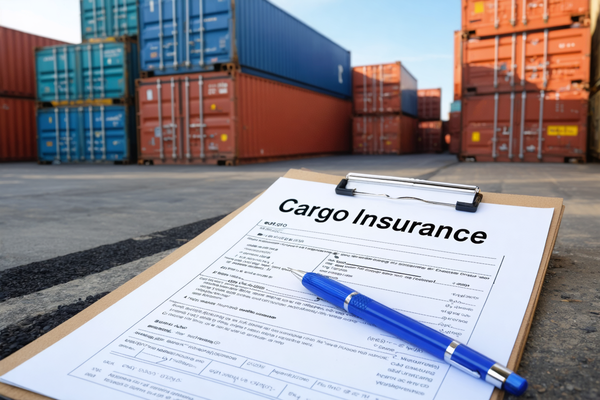
Cargo insurance isn’t mandatory, but it’s highly recommended. International shipping involves risks such as damage, theft, or loss during transit. By insuring your goods, you minimize financial risks and ensure peace of mind.
Benefits of Cargo Insurance
Financial Protection: Covers the full or partial value of goods in case of damage or loss.
Hassle-Free Claims: Reliable insurance providers make claiming compensation straightforward.
Compliance: Certain Incoterms like CIF require mandatory insurance coverage.
Advice: If your goods are high-value or fragile, always purchase insurance. DFH Logistics can assist with obtaining cost-effective coverage.
How Much Does It Cost for the Cargo Insurance?
The cost of cargo insurance depends on the declared value of your goods and the shipping route. Typically, the rate ranges from 0.3% to 0.7% of the shipment’s total value. Here’s an example to give you an idea:
Declared Shipment Value (USD)
Insurance Rate
Insurance Cost (USD)
$10,000
0.5%
$50
$50,000
0.4%
$200
$100,000
0.3%
$300
Tip: Consult with DFH Logistics for tailored insurance rates and ensure your shipment is covered at a competitive price.
By investing in cargo insurance, you minimize risks and safeguard your business against unexpected losses during transportation.
How to Reduce Shipping Costs from China to UAE?
Reducing shipping costs is a priority for businesses importing from China to the UAE. Here are some practical tips:
Optimize Packaging: Work with your suppliers to reduce packaging size and weight. Consolidating multiple items into fewer packages can lower dimensional weight charges.
Choose the Right Shipping Method: For larger shipments, sea freight (LCL or FCL) offers significant cost savings compared to air freight.
Leverage Freight Forwarder Expertise: A reliable freight forwarder like DFH Logistics can negotiate better shipping rates due to established relationships with carriers.
Ship in Bulk: Grouping orders reduces per-unit shipping costs and minimizes handling fees.
How to Verify Quality Before Shipments Leave China to UAE?
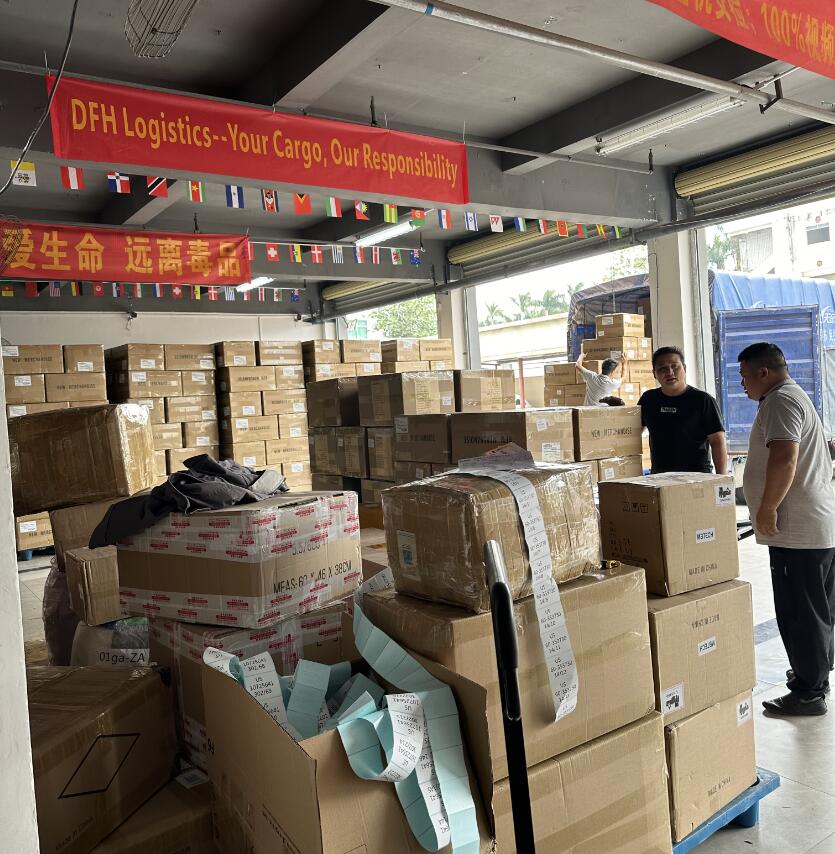
Ensuring product quality before shipments leave China is crucial to avoid costly returns or disputes. Here’s how you can do it:
Request Quality Checks: Ask your supplier for detailed photos, videos, or samples of the goods before shipment.
Hire a Third-Party Inspection Service: Independent agencies can conduct on-site inspections at the supplier’s location.
Freight Forwarder Assistance: DFH Logistics offers quality and quantity checking services. We can inspect goods before shipping and share photos or videos for your review.
Tip: Verifying quality before shipment saves time and ensures customer satisfaction in the UAE market.
How to Ship from Different China Suppliers to UAE at the Same Time?
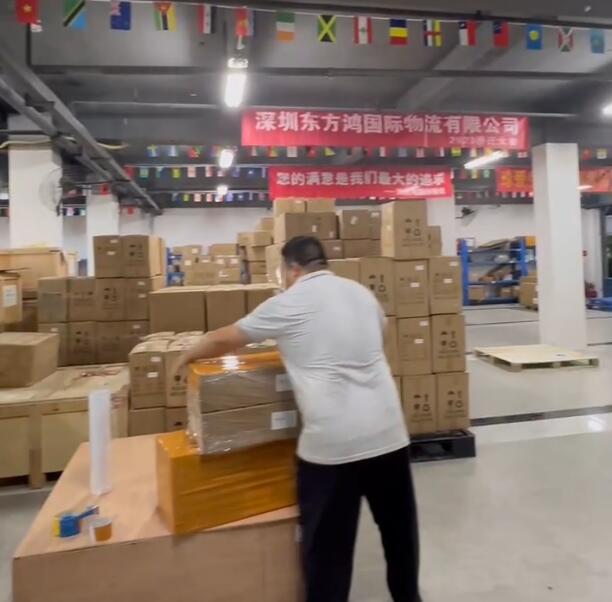
Shipping from multiple suppliers in China to the UAE can be simplified with consolidation services. DFH Logistics specializes in helping clients combine shipments from different suppliers into one consolidated shipment.
Benefits of Using Consolidation Services:
Cost Savings: Reduces shipping costs by combining smaller shipments into one larger package.
Simplified Logistics: Streamlines customs clearance and reduces handling fees.
Confidentiality: Ensures suppliers do not communicate with each other, protecting your business relationships.
Free Storage: DFH Logistics provides free warehousing for up to 30 days, allowing you to wait until all goods are ready before shipping.
Partnering with DFH Logistics ensures your consolidated shipments arrive on time and at a lower cost.
Can You Ship from China to Amazon FBA in UAE?
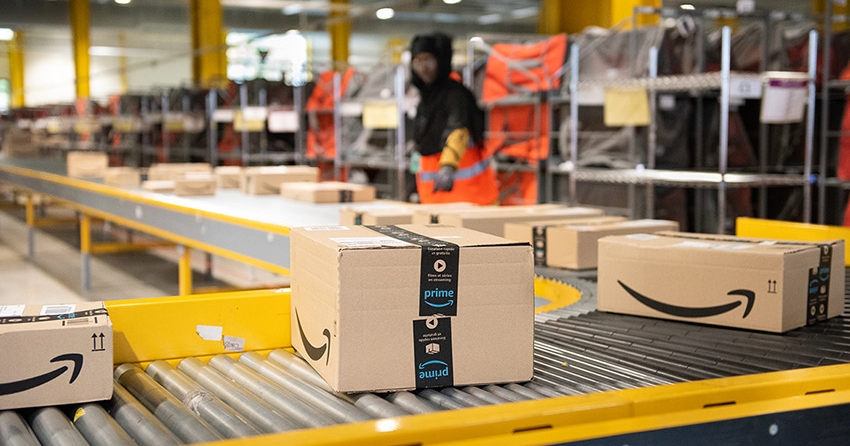
Yes, DFH Logistics can ship your goods from China directly to Amazon FBA warehouses in the UAE. We handle the entire process, including:
Export Documentation: Preparing the necessary export and customs documents.
Labeling: Ensuring your goods meet Amazon’s FBA packaging and labeling requirements.
Customs Clearance: Managing import taxes and customs clearance in the UAE.
With DFH Logistics, you can focus on growing your Amazon business while we handle the logistics.
How to Track the Shipment from China to UAE?
Tracking your shipment is simple with DFH Logistics. After your goods are shipped, we provide:
Tracking Number: A unique tracking ID for your shipment.
Tracking Website: Access to a user-friendly tracking platform where you can monitor the entire shipping journey, including updates on:
Departure and arrival at ports.
Customs clearance status.
Final delivery progress.
This transparency allows you to stay informed at every stage of the shipping process.
How to Choose a Reliable Freight Forwarder from China to UAE?

Selecting a reliable freight forwarder is crucial for a smooth shipping experience. Here are key factors to consider:
Experience: Choose a forwarder with proven expertise in handling shipments to the UAE.
Services Offered: Ensure they provide comprehensive services, including customs clearance, consolidation, and tracking.
Customer Support: Look for a forwarder that offers responsive communication and professional advice.
Cost Transparency: Select a forwarder with clear and upfront pricing.
DFH Logistics meets all these criteria and has been helping clients ship seamlessly from China to the UAE since 2013.
Why Consider DFH Logistics as Your Freight Forwarder from China to UAE?

DFH Logistics is a trusted partner for businesses shipping goods from China to the UAE. Here’s why:
Comprehensive Services: From pick-up and consolidation to customs clearance and final delivery, we handle everything.
Proven Expertise: With over 10 years of experience, we’ve successfully shipped for thousands of clients.
Cost-Effective Solutions: Our network allows us to negotiate competitive rates while maintaining quality.
Customer-Centric Approach: We prioritize your needs, offering free warehousing and personalized support.
Let DFH Logistics simplify your shipping process and help your business thrive in the UAE market.
Conclusion
Shipping from China to the UAE can be simple and efficient with the right planning and a trusted freight forwarder. If you have any additional questions or need assistance, feel free to contact us today. Let DFH Logistics be your reliable partner for hassle-free shipping!
Your Trusted Freight Forwarder from China to UAE
Penny PanNovember 27, 20240 comments
Shipping goods from China to the UAE is an essential step for businesses and individuals…
A freight forwarder in Shenzhen, China helps importers manage supplier pickup, consolidation, export declaration, and international shipping through air, sea,…
Shipping goods from China to the UAE is an essential step for businesses and individuals importing products. Choosing the right shipping method ensures your cargo arrives safely, quickly, and cost-effectively. This guide will explore your options, their advantages, and why partnering with a trusted freight forwarder like DFH Logistics can make the process seamless.
What are the 3 Shipping Options from China to UAE?
When importing goods from China to the UAE, there are three main options to consider. These options differ in terms of cost, transit time, and the level of involvement required. Below, we break them down and explain why working with your own China freight forwarder often provides the best balance of efficiency and cost.
Shipping directly by Chinese Supplier
When using your Chinese supplier for shipping, the supplier handles everything from product preparation to freight arrangements. This option can seem convenient, but it has notable drawbacks.
Advantages: Minimal involvement for the buyer, as the supplier manages all logistics.
Disadvantages: Limited control over carrier choice, lack of transparency in costs, and potential delays if the supplier prioritizes other shipments.
This method is suitable for small shipments or when cost is not a primary concern, but it may not provide the flexibility or reliability needed for larger or time-sensitive orders.
Shipping directly by UAE Local Freight Forwarder
Some businesses choose to engage a UAE-based freight forwarder to coordinate shipping from China. The UAE-based forwarder manages logistics with Chinese suppliers and arranges delivery to the UAE.
Advantages: Familiarity with UAE regulations and customs processes.
Disadvantages: Limited presence in China, which can lead to miscommunication, higher costs, and reliance on third-party services in China.
While UAE-based forwarders excel at local delivery, they often lack the on-ground expertise in China to streamline the entire process efficiently.
Shipping by Your Own China Freight Forwarder
Partnering with your own freight forwarder based in China, like DFH Logistics, offers the most comprehensive and cost-effective solution. This option ensures end-to-end control, transparency, and tailored services to meet your specific needs.
Advantages: Full control over shipping, detailed updates, cost-saving options, and seamless coordination from supplier pickup to UAE delivery.
Disadvantages: Requires selecting a reliable partner, but once chosen, it eliminates most logistics headaches.
For businesses seeking efficiency and reliability, this method is the best choice. A trusted China freight forwarder combines local expertise with global logistics capabilities, ensuring a smooth shipping experience.
What are the shipping methods from China to UAE?
Shipping from China to UAE involves multiple transportation options tailored to different shipment sizes, timelines, and budgets. The main methods include air freight, sea freight, express shipping, and DDP shipping. Below, we detail each method, their benefits, and when to use them.
Air freight from China to UAE: Pros and Cons
Air freight is one of the fastest and most efficient ways to ship goods from China to the UAE. It is ideal for urgent shipments or high-value items requiring quick transit. Let’s explore its specific services below.
Air freight port to port in UAE
Air freight port-to-port service involves shipping goods from an airport in China to a designated airport in the UAE.
Advantages:
Fast transit time (1–3 days depending on direct or transit flights).
Cost-effective for medium-sized, time-sensitive shipments.
Disadvantages:
Requires local customs clearance and transportation arrangements after arrival.
May incur additional fees for storage at the destination airport if not picked up promptly.
Best for: Businesses with local expertise in handling customs and onward logistics.
Air freight door to door in UAE
This service provides end-to-end logistics, picking up shipments from a Chinese supplier and delivering them directly to the recipient’s address in the UAE.
Advantages:
Hassle-free process with customs clearance and final delivery handled by the forwarder.
Perfect for businesses or individuals unfamiliar with local customs requirements.
Disadvantages:
Higher cost compared to port-to-port shipping.
Less flexibility for arranging your own delivery services.
Best for: Individuals or businesses seeking convenience and a single point of contact.
Sea freight from China to UAE: FCL vs. LCL
Sea freight is a cost-effective shipping method for large or heavy goods. Depending on the shipment size, you can choose between Full Container Load (FCL) and Less than Container Load (LCL). Let’s dive deeper into these two options.
FCL Shipping from China to UAE
FCL involves booking an entire container for your goods, providing exclusive use of the space.
Advantages:
Lower cost per unit for large volumes.
Reduced risk of damage, as no cargo sharing is involved.
Disadvantages:
Higher upfront cost if shipping smaller loads.
May require additional warehousing at the destination if goods are not distributed immediately.
Best for: Businesses with bulk shipments that fill or nearly fill a container.
LCL Shipping from China to UAE
LCL allows businesses to share container space with other shipments, paying only for the space used.
Advantages:
Cost-effective for smaller shipments.
Flexible scheduling options.
Disadvantages:
Higher risk of delays due to consolidation at origin and deconsolidation at destination.
Increased handling may lead to higher chances of damage.
Best for: Small businesses or individuals with shipments not large enough to fill a container.
Express Shipping from China to UAE: Is It Worth It?
Express shipping is the fastest option for sending goods from China to the UAE. Though it is more expensive, it’s perfect for small, time-critical shipments. Popular providers include DHL, FEDEX, and UPS.
DHL Express from China to UAE
DHL offers fast and reliable delivery with comprehensive tracking services.
Advantages: Wide network and guaranteed delivery timelines.
Disadvantages: Premium pricing for urgent shipments.
Best for: E-commerce businesses with small but high-value products.
FEDEX Express from China to UAE
FedEx specializes in shipping larger parcels quickly and efficiently.
Advantages: Tailored services for oversized goods.
Disadvantages: Higher rates for expedited delivery.
Best for: Medium to large-sized businesses needing reliable international shipping.
UPS Express Shipping from China to UAE
UPS provides competitive pricing and reliable delivery for urgent shipments.
Advantages: Strong customs expertise.
Disadvantages: Limited availability in remote regions.
Best for: Businesses requiring cost-effective express shipping.
DDP Shipping from China to UAE
DDP (Delivery Duty Paid) shipping is one of the most convenient and comprehensive logistics solutions for transporting goods from China to the UAE. This method includes shipping, customs clearance, and tax payment, ensuring your shipment reaches its final destination without any extra hassle. For businesses and individuals unfamiliar with customs regulations or wanting a simplified process, DDP shipping is the best choice. Let’s explore the two primary DDP options: Air Freight DDP and Sea Freight DDP.
Air Freight DDP Shipping from China to UAE
Air Freight DDP is a fast and reliable option for shipping goods with comprehensive logistics services, including customs clearance and tax payment. Goods are picked up from the supplier’s location in China and delivered directly to the recipient in the UAE.
Advantages:
Speed: Transit times are as fast as 3–5 days, making it ideal for urgent or high-value shipments.
Convenience: All customs and duty requirements are managed, reducing the workload for the importer.
Reliability: End-to-end tracking ensures full visibility throughout the process.
Disadvantages:
Cost: Due to the speed and services included, Air Freight DDP is more expensive than other options.
Weight limitations: Best suited for small to medium-sized shipments, as costs rise significantly for heavier cargo.
Best for: Time-sensitive shipments, such as electronics, fashion items, or other high-value goods requiring a quick and secure delivery.
Sea Freight DDP Shipping from China to UAE
Sea Freight DDP is a cost-effective option for shipping large or bulky goods from China to the UAE. This service includes picking up goods from the supplier, handling customs clearance, and paying import duties, with final delivery to the recipient’s address.
Advantages:
Cost-efficiency: Sea freight offers lower costs compared to air freight, especially for bulk shipments.
Comprehensive service: Importers don’t need to manage customs or pay duties separately.
Suitable for large volumes: Ideal for heavy or oversized shipments that would be costly via air freight.
Disadvantages:
Slower transit time: Shipping typically takes 20–30 days, which might not suit urgent deliveries.
Best for: Businesses shipping large quantities of goods, such as furniture, industrial equipment, or other heavy items, where cost savings outweigh the longer delivery time.
What Ports in UAE Can You Ship to from China?
Shipping goods from China to the UAE offers multiple options for entry points, whether you are using air freight or sea freight. The UAE boasts world-class infrastructure with major airports and seaports that streamline the import process. Below, we list the key airports and seaports where your shipments can arrive.
Major Airports in UAE
When shipping by air freight, the following airports in the UAE are commonly used for imports:
Airport Name
City
IATA Code
Special Features
Dubai International Airport
Dubai
DXB
One of the busiest cargo hubs in the world.
Abu Dhabi International Airport
Abu Dhabi
AUH
Offers integrated logistics for air cargo.
Sharjah International Airport
Sharjah
SHJ
Known for its proximity to industrial and logistics hubs.
Al Maktoum International Airport
Dubai South
DWC
Handles large-scale cargo shipments with advanced facilities.
Major Sea Ports in UAE
For sea freight shipments, the UAE features some of the most prominent seaports in the Middle East:
Port Name
City
Special Features
Jebel Ali Port
Dubai
Largest container port in the Middle East.
Khalifa Port
Abu Dhabi
State-of-the-art deepwater port with advanced facilities.
Port Rashid
Dubai
Handles cruise and general cargo shipments.
Port of Fujairah
Fujairah
Only multi-purpose port on the UAE’s east coast.
Khor Fakkan Container Terminal
Sharjah
Specializes in transshipment cargo.
Both air and sea options offer flexibility and connectivity for different shipment needs. Choosing the right port depends on factors like shipment size, urgency, and your recipient’s location in the UAE.
Which Documents Do You Need to Prepare When Shipping from China to UAE?
Shipping goods from China to the UAE involves several critical documents to ensure smooth customs clearance and compliance with regulations. Proper preparation of these documents minimizes delays, prevents penalties, and ensures a hassle-free logistics process. Below is a list of the essential documents you’ll need and tips on how to prepare them.
Essential Documentation for Shipping from China to the UAE
Commercial Invoice
This is a detailed invoice provided by the seller, outlining the goods being shipped, their value, and terms of sale.
Packing List
A document listing the contents of each package, including weight, dimensions, and quantities. This is crucial for customs inspection.
Bill of Lading (BOL) or Airway Bill (AWB)
For sea freight: The Bill of Lading acts as a contract between the shipper and carrier.
For air freight: The Airway Bill serves the same purpose for air shipments.
Certificate of Origin
This certifies that the goods were manufactured or produced in China and is often required to qualify for preferential duties.
Import License
Depending on the nature of the goods, the importer in the UAE may need a specific license to receive the shipment.
Customs Declaration Forms
These forms provide details of the shipment for customs authorities in both China and the UAE.
Inspection Certificate (if applicable)
For certain regulated goods like electronics, machinery, or food products, an inspection certificate may be mandatory.
Proforma Invoice (for pre-shipping quotes)
While not mandatory for customs, this document is often required for initiating payments or confirming orders.
Insurance Certificate
Proof of cargo insurance to cover damages or loss during transit, which is highly recommended for high-value shipments.
How to Prepare These Documents
If you’re unsure about preparing these documents, here are some tips to simplify the process:
Ask your Chinese supplier for assistance: Most suppliers are familiar with export documentation and can provide key documents like the Commercial Invoice, Packing List, and Certificate of Origin.
Work with your China freight forwarder: A reliable freight forwarder, like DFH Logistics, can help you prepare, review, and submit all necessary documentation. They also ensure compliance with both Chinese and UAE customs regulations.
By leveraging the expertise of your supplier or freight forwarder, you can avoid common mistakes and ensure your shipment reaches the UAE smoothly and efficiently.
What Products Can Be Imported from China to UAE?
The UAE is one of the largest importers of goods from China, thanks to its thriving trade market. A wide range of products can be imported, but importers should also be aware of restrictions and prohibited items to avoid complications. Below, we list common imports and items that are restricted or prohibited.
Common Products Imported from China to UAE
Category
Examples
Electronics
Mobile phones, laptops, TVs, and accessories.
Textiles and Apparel
Clothing, footwear, and fabric.
Furniture
Home and office furniture, décor items.
Building Materials
Tiles, sanitary ware, and construction equipment.
Machinery and Tools
Industrial equipment and power tools.
Household Goods
Kitchenware, appliances, and utensils.
Toys and Baby Products
Dolls, educational toys, and baby gear.
Automotive Parts
Car accessories, tires, and spare parts.
Beauty Products
Cosmetics, skincare, and haircare items.
E-commerce Goods
General merchandise for reselling.
These products are among the most frequently imported goods from China to the UAE due to their affordability and demand in the region.
Prohibited and Restricted Items for Shipping to the UAE
While many products can be imported, there are strict rules regarding certain goods. Below are some items prohibited or restricted from shipping to the UAE:
Category
Examples
Prohibited Items
Drugs, narcotics, counterfeit currency, weapons, and explosives.
Restricted Items
Alcohol (requires a special license), live animals, ivory, and certain chemicals.
Tips for Compliance
Check UAE Customs Guidelines: Always verify the latest regulations for prohibited and restricted goods.
Coordinate with Your Supplier or Freight Forwarder: Suppliers and experienced freight forwarders like DFH Logistics can help ensure your shipment complies with UAE import laws.
Being aware of both opportunities and restrictions ensures a smooth importing process from China to the UAE.
How Long Does It Take to Ship from China to UAE?
Understanding the shipping times from China to the UAE is crucial for planning your logistics and meeting delivery deadlines. The transit time depends on the shipping method chosen—air, sea, express, or DDP—and other external factors. Here’s a detailed breakdown of shipping durations for each mode of transport.
Estimated Shipping Times by Transport Mode
Shipping Method
Estimated Time
Best For
Air Freight (Direct Flight)
1–2 days
Urgent shipments, high-value goods.
Air Freight (Transit Flight)
3–5 days
Non-urgent air shipments.
Sea Freight (FCL)
20–25 days
Large, bulk shipments needing cost savings.
Sea Freight (LCL)
25–30 days
Smaller shipments with shared container use.
Express Shipping
2–5 days
Small, time-sensitive packages.
DDP (Air Freight)
5–8 days
Quick delivery with customs handled.
DDP (Sea Freight)
25–35 days
Cost-effective, all-inclusive shipping.
Factors That Affect Shipping Times from China to UAE
Shipping Method
The choice of transport significantly impacts transit time. Air freight is the fastest, while sea freight typically takes longer due to maritime routes.
Port Congestion
During peak seasons or unexpected delays, congestion at Chinese or UAE ports can extend shipping durations.
Customs Clearance
Efficient documentation speeds up customs processing. Errors or incomplete documents may cause significant delays.
Weather Conditions
Adverse weather, such as typhoons or storms, can disrupt air and sea schedules, leading to delays.
Route and Carrier Availability
Direct shipping routes and well-established carriers tend to offer quicker delivery, while transit flights or shared containers (LCL) may add extra time.
Holidays and Peak Seasons
Chinese New Year, Ramadan, and other peak seasons can slow down production, transportation, and port operations.
By choosing the right shipping method and preparing well for potential delays, you can minimize disruptions and ensure timely delivery of your goods.
What Is the Best Shipping Method from China to UAE?
Choosing the best shipping method depends on your priorities: speed, cost, or convenience. Air freight is ideal for urgent deliveries, sea freight is great for bulk shipments, and DDP shipping is perfect for those who prefer a hassle-free experience. Here’s a brief overview:
Air Freight: Best for urgent, high-value shipments with short deadlines.
Sea Freight: Best for cost-efficient transportation of heavy or large goods.
DDP Shipping: Best for complete convenience, including customs and tax handling.
What Is the Cheapest Shipping Method from China to UAE?
Sea freight is generally the most cost-effective option, especially for large shipments. By choosing LCL (Less than Container Load) shipping, you only pay for the container space you use. However, for smaller shipments, DDP sea freight can also offer competitive pricing while including customs and tax services.
Factors That Influence Shipping Costs:
Shipment Size and Weight: Heavier and larger shipments benefit from sea freight.
Urgency: Non-urgent shipments can save costs with slower methods.
Additional Services: Options like customs handling (e.g., DDP) may increase costs but save time and effort.
How to Do the Customs Clearance from China to UAE?
Customs clearance is a critical step when shipping goods from China to the UAE. It involves submitting the necessary documents, paying applicable duties, and adhering to regulations. Here’s the process:
Prepare Documentation:
Ensure all required documents are accurate, including:
Commercial Invoice
Packing List
Bill of Lading or Airway Bill
Certificate of Origin
Import License (if applicable)
Submit to Customs:
File the documents with Chinese customs for export and UAE customs for import. This step may involve inspections.
Pay Duties and Taxes:
The importer is typically responsible for paying duties and taxes, unless DDP shipping is used.
Receive Goods:
Once cleared, the shipment can be released for delivery.
Tip: To simplify the process, work with a freight forwarder like DFH Logistics. They handle customs clearance efficiently and ensure compliance.
Who Pays for Customs When Importing from China to the UAE?
The responsibility for customs duties depends on the terms agreed upon between the buyer and seller. Here are the common scenarios:
Buyer Pays (DAP or EXW Terms):
Under Delivered at Place (DAP) or Ex Works (EXW) terms, the buyer is responsible for paying duties and taxes in the UAE.
Seller Pays (DDP Terms):
Under Delivered Duty Paid (DDP) terms, the seller handles customs clearance and pays all duties and taxes before delivery.
How to Decide?
Choose DDP shipping for convenience and a stress-free experience.
Choose DAP or EXW if you have the expertise to handle customs clearance and want more control over the process.
By understanding your shipping terms and responsibilities, you can avoid unexpected costs and delays.
How Much Duties and Taxes Should You Pay for Importing Goods to the UAE?
When importing goods from China to the UAE, understanding the applicable duties and taxes is essential for budgeting and ensuring compliance with customs regulations. The UAE generally applies a 5% customs duty on most imported goods, along with a 5% Value Added Tax (VAT) calculated on the total value of the shipment, including shipping costs and customs duty.
While these rates cover the majority of goods, some products may have exceptions or additional requirements based on UAE customs policies. Always check the latest regulations or consult your freight forwarder for precise calculations.
Example of Duties and Taxes for Common Goods
Product Category
Customs Duty
VAT (5%)
Applicability
Electronics
5%
5% of total value
Laptops, mobile phones.
Furniture
5%
5% of total value
Chairs, tables, and décor.
Apparel and Textiles
5%
5% of total value
Clothing, footwear, fabric.
Industrial Equipment
5%
5% of total value
Machinery and tools.
Beauty Products
5%
5% of total value
Skincare, cosmetics.
Note: Total value includes the cost of goods, shipping charges, and insurance, as declared on the Commercial Invoice.
Tips for Accurate Duty and Tax Calculation
Check Product HS Codes: Use the Harmonized System (HS) Code for your goods to identify their specific customs duty rate.
Work with a Freight Forwarder: A logistics expert like DFH Logistics can help calculate duties and taxes accurately based on UAE customs requirements.
Avoid Under-Declaration: Ensure your declared values match the true cost of goods to avoid fines or shipment delays.
By understanding the basics of duties and taxes, you can better manage your logistics costs and ensure smooth customs clearance when importing goods into the UAE.
Which Incoterms Are Good for Shipping Goods from China to UAE?
Selecting the right Incoterm is vital to define responsibilities and costs between you and your supplier when shipping from China to the UAE. Here are the commonly used Incoterms:
Recommended Incoterms for UAE Shipments
EXW (Ex Works)
What it means: The buyer assumes all responsibility for shipping from the supplier’s location in China.
Best for: Experienced importers who can manage the entire logistics process.
FOB (Free on Board)
What it means: The seller delivers goods to the port of shipment, while the buyer takes over shipping from there.
Best for: Importers seeking balanced responsibilities between buyer and seller.
CIF (Cost, Insurance, and Freight)
What it means: The seller covers shipping and insurance until the goods arrive at the destination port.
Best for: Buyers preferring risk coverage during transit.
DDP (Delivered Duty Paid)
What it means: The seller handles all logistics, customs clearance, and tax payments until delivery to the buyer’s door.
Best for: Beginners or those seeking convenience.
Pro Tip: If you’re new to importing, start with DDP to avoid dealing with customs and taxes. DFH Logistics specializes in managing DDP shipments seamlessly.
Do I Have to Buy Cargo Insurance When Shipping from China to UAE?
Cargo insurance isn’t mandatory, but it’s highly recommended. International shipping involves risks such as damage, theft, or loss during transit. By insuring your goods, you minimize financial risks and ensure peace of mind.
Benefits of Cargo Insurance
Financial Protection: Covers the full or partial value of goods in case of damage or loss.
Hassle-Free Claims: Reliable insurance providers make claiming compensation straightforward.
Compliance: Certain Incoterms like CIF require mandatory insurance coverage.
Advice: If your goods are high-value or fragile, always purchase insurance. DFH Logistics can assist with obtaining cost-effective coverage.
How Much Does It Cost for the Cargo Insurance?
The cost of cargo insurance depends on the declared value of your goods and the shipping route. Typically, the rate ranges from 0.3% to 0.7% of the shipment’s total value. Here’s an example to give you an idea:
Declared Shipment Value (USD)
Insurance Rate
Insurance Cost (USD)
$10,000
0.5%
$50
$50,000
0.4%
$200
$100,000
0.3%
$300
Tip: Consult with DFH Logistics for tailored insurance rates and ensure your shipment is covered at a competitive price.
By investing in cargo insurance, you minimize risks and safeguard your business against unexpected losses during transportation.
How to Reduce Shipping Costs from China to UAE?
Reducing shipping costs is a priority for businesses importing from China to the UAE. Here are some practical tips:
Optimize Packaging: Work with your suppliers to reduce packaging size and weight. Consolidating multiple items into fewer packages can lower dimensional weight charges.
Choose the Right Shipping Method: For larger shipments, sea freight (LCL or FCL) offers significant cost savings compared to air freight.
Leverage Freight Forwarder Expertise: A reliable freight forwarder like DFH Logistics can negotiate better shipping rates due to established relationships with carriers.
Ship in Bulk: Grouping orders reduces per-unit shipping costs and minimizes handling fees.
How to Verify Quality Before Shipments Leave China to UAE?
Ensuring product quality before shipments leave China is crucial to avoid costly returns or disputes. Here’s how you can do it:
Request Quality Checks: Ask your supplier for detailed photos, videos, or samples of the goods before shipment.
Hire a Third-Party Inspection Service: Independent agencies can conduct on-site inspections at the supplier’s location.
Freight Forwarder Assistance: DFH Logistics offers quality and quantity checking services. We can inspect goods before shipping and share photos or videos for your review.
Tip: Verifying quality before shipment saves time and ensures customer satisfaction in the UAE market.
How to Ship from Different China Suppliers to UAE at the Same Time?
Shipping from multiple suppliers in China to the UAE can be simplified with consolidation services. DFH Logistics specializes in helping clients combine shipments from different suppliers into one consolidated shipment.
Benefits of Using Consolidation Services:
Cost Savings: Reduces shipping costs by combining smaller shipments into one larger package.
Simplified Logistics: Streamlines customs clearance and reduces handling fees.
Confidentiality: Ensures suppliers do not communicate with each other, protecting your business relationships.
Free Storage: DFH Logistics provides free warehousing for up to 30 days, allowing you to wait until all goods are ready before shipping.
Partnering with DFH Logistics ensures your consolidated shipments arrive on time and at a lower cost.
Can You Ship from China to Amazon FBA in UAE?
Yes, DFH Logistics can ship your goods from China directly to Amazon FBA warehouses in the UAE. We handle the entire process, including:
Export Documentation: Preparing the necessary export and customs documents.
Labeling: Ensuring your goods meet Amazon’s FBA packaging and labeling requirements.
Customs Clearance: Managing import taxes and customs clearance in the UAE.
With DFH Logistics, you can focus on growing your Amazon business while we handle the logistics.
How to Track the Shipment from China to UAE?
Tracking your shipment is simple with DFH Logistics. After your goods are shipped, we provide:
Tracking Number: A unique tracking ID for your shipment.
Tracking Website: Access to a user-friendly tracking platform where you can monitor the entire shipping journey, including updates on:
Departure and arrival at ports.
Customs clearance status.
Final delivery progress.
This transparency allows you to stay informed at every stage of the shipping process.
How to Choose a Reliable Freight Forwarder from China to UAE?
Selecting a reliable freight forwarder is crucial for a smooth shipping experience. Here are key factors to consider:
Experience: Choose a forwarder with proven expertise in handling shipments to the UAE.
Services Offered: Ensure they provide comprehensive services, including customs clearance, consolidation, and tracking.
Customer Support: Look for a forwarder that offers responsive communication and professional advice.
Cost Transparency: Select a forwarder with clear and upfront pricing.
DFH Logistics meets all these criteria and has been helping clients ship seamlessly from China to the UAE since 2013.
Why Consider DFH Logistics as Your Freight Forwarder from China to UAE?
DFH Logistics is a trusted partner for businesses shipping goods from China to the UAE. Here’s why:
Comprehensive Services: From pick-up and consolidation to customs clearance and final delivery, we handle everything.
Proven Expertise: With over 10 years of experience, we’ve successfully shipped for thousands of clients.
Cost-Effective Solutions: Our network allows us to negotiate competitive rates while maintaining quality.
Customer-Centric Approach: We prioritize your needs, offering free warehousing and personalized support.
Let DFH Logistics simplify your shipping process and help your business thrive in the UAE market.
Conclusion
Shipping from China to the UAE can be simple and efficient with the right planning and a trusted freight forwarder. If you have any additional questions or need assistance, feel free to contact us today. Let DFH Logistics be your reliable partner for hassle-free shipping!
Shipping goods from China to the UAE is an essential step for businesses and individuals importing products. Choosing the right shipping method ensures your cargo arrives safely, quickly, and cost-effectively. This guide will explore your options, their advantages, and why partnering with a trusted freight forwarder like DFH Logistics can make the process seamless.
What are the 3 Shipping Options from China to UAE?
When importing goods from China to the UAE, there are three main options to consider. These options differ in terms of cost, transit time, and the level of involvement required. Below, we break them down and explain why working with your own China freight forwarder often provides the best balance of efficiency and cost.
Shipping directly by Chinese Supplier
When using your Chinese supplier for shipping, the supplier handles everything from product preparation to freight arrangements. This option can seem convenient, but it has notable drawbacks.
Advantages: Minimal involvement for the buyer, as the supplier manages all logistics.
Disadvantages: Limited control over carrier choice, lack of transparency in costs, and potential delays if the supplier prioritizes other shipments.
This method is suitable for small shipments or when cost is not a primary concern, but it may not provide the flexibility or reliability needed for larger or time-sensitive orders.
Shipping directly by UAE Local Freight Forwarder
Some businesses choose to engage a UAE-based freight forwarder to coordinate shipping from China. The UAE-based forwarder manages logistics with Chinese suppliers and arranges delivery to the UAE.
Advantages: Familiarity with UAE regulations and customs processes.
Disadvantages: Limited presence in China, which can lead to miscommunication, higher costs, and reliance on third-party services in China.
While UAE-based forwarders excel at local delivery, they often lack the on-ground expertise in China to streamline the entire process efficiently.
Shipping by Your Own China Freight Forwarder
Partnering with your own freight forwarder based in China, like DFH Logistics, offers the most comprehensive and cost-effective solution. This option ensures end-to-end control, transparency, and tailored services to meet your specific needs.
Advantages: Full control over shipping, detailed updates, cost-saving options, and seamless coordination from supplier pickup to UAE delivery.
Disadvantages: Requires selecting a reliable partner, but once chosen, it eliminates most logistics headaches.
For businesses seeking efficiency and reliability, this method is the best choice. A trusted China freight forwarder combines local expertise with global logistics capabilities, ensuring a smooth shipping experience.
What are the shipping methods from China to UAE?
Shipping from China to UAE involves multiple transportation options tailored to different shipment sizes, timelines, and budgets. The main methods include air freight, sea freight, express shipping, and DDP shipping. Below, we detail each method, their benefits, and when to use them.
Air freight from China to UAE: Pros and Cons
Air freight is one of the fastest and most efficient ways to ship goods from China to the UAE. It is ideal for urgent shipments or high-value items requiring quick transit. Let’s explore its specific services below.
Air freight port to port in UAE
Air freight port-to-port service involves shipping goods from an airport in China to a designated airport in the UAE.
Advantages:
Fast transit time (1–3 days depending on direct or transit flights).
Cost-effective for medium-sized, time-sensitive shipments.
Disadvantages:
Requires local customs clearance and transportation arrangements after arrival.
May incur additional fees for storage at the destination airport if not picked up promptly.
Best for: Businesses with local expertise in handling customs and onward logistics.
Air freight door to door in UAE
This service provides end-to-end logistics, picking up shipments from a Chinese supplier and delivering them directly to the recipient’s address in the UAE.
Advantages:
Hassle-free process with customs clearance and final delivery handled by the forwarder.
Perfect for businesses or individuals unfamiliar with local customs requirements.
Disadvantages:
Higher cost compared to port-to-port shipping.
Less flexibility for arranging your own delivery services.
Best for: Individuals or businesses seeking convenience and a single point of contact.
Sea freight from China to UAE: FCL vs. LCL
Sea freight is a cost-effective shipping method for large or heavy goods. Depending on the shipment size, you can choose between Full Container Load (FCL) and Less than Container Load (LCL). Let’s dive deeper into these two options.
FCL Shipping from China to UAE
FCL involves booking an entire container for your goods, providing exclusive use of the space.
Advantages:
Lower cost per unit for large volumes.
Reduced risk of damage, as no cargo sharing is involved.
Disadvantages:
Higher upfront cost if shipping smaller loads.
May require additional warehousing at the destination if goods are not distributed immediately.
Best for: Businesses with bulk shipments that fill or nearly fill a container.
LCL Shipping from China to UAE
LCL allows businesses to share container space with other shipments, paying only for the space used.
Advantages:
Cost-effective for smaller shipments.
Flexible scheduling options.
Disadvantages:
Higher risk of delays due to consolidation at origin and deconsolidation at destination.
Increased handling may lead to higher chances of damage.
Best for: Small businesses or individuals with shipments not large enough to fill a container.
Express Shipping from China to UAE: Is It Worth It?
Express shipping is the fastest option for sending goods from China to the UAE. Though it is more expensive, it’s perfect for small, time-critical shipments. Popular providers include DHL, FEDEX, and UPS.
DHL Express from China to UAE
DHL offers fast and reliable delivery with comprehensive tracking services.
Advantages: Wide network and guaranteed delivery timelines.
Disadvantages: Premium pricing for urgent shipments.
Best for: E-commerce businesses with small but high-value products.
FEDEX Express from China to UAE
FedEx specializes in shipping larger parcels quickly and efficiently.
Advantages: Tailored services for oversized goods.
Disadvantages: Higher rates for expedited delivery.
Best for: Medium to large-sized businesses needing reliable international shipping.
UPS Express Shipping from China to UAE
UPS provides competitive pricing and reliable delivery for urgent shipments.
Advantages: Strong customs expertise.
Disadvantages: Limited availability in remote regions.
Best for: Businesses requiring cost-effective express shipping.
DDP Shipping from China to UAE
DDP (Delivery Duty Paid) shipping is one of the most convenient and comprehensive logistics solutions for transporting goods from China to the UAE. This method includes shipping, customs clearance, and tax payment, ensuring your shipment reaches its final destination without any extra hassle. For businesses and individuals unfamiliar with customs regulations or wanting a simplified process, DDP shipping is the best choice. Let’s explore the two primary DDP options: Air Freight DDP and Sea Freight DDP.
Air Freight DDP Shipping from China to UAE
Air Freight DDP is a fast and reliable option for shipping goods with comprehensive logistics services, including customs clearance and tax payment. Goods are picked up from the supplier’s location in China and delivered directly to the recipient in the UAE.
Advantages:
Speed: Transit times are as fast as 3–5 days, making it ideal for urgent or high-value shipments.
Convenience: All customs and duty requirements are managed, reducing the workload for the importer.
Reliability: End-to-end tracking ensures full visibility throughout the process.
Disadvantages:
Cost: Due to the speed and services included, Air Freight DDP is more expensive than other options.
Weight limitations: Best suited for small to medium-sized shipments, as costs rise significantly for heavier cargo.
Best for: Time-sensitive shipments, such as electronics, fashion items, or other high-value goods requiring a quick and secure delivery.
Sea Freight DDP Shipping from China to UAE
Sea Freight DDP is a cost-effective option for shipping large or bulky goods from China to the UAE. This service includes picking up goods from the supplier, handling customs clearance, and paying import duties, with final delivery to the recipient’s address.
Advantages:
Cost-efficiency: Sea freight offers lower costs compared to air freight, especially for bulk shipments.
Comprehensive service: Importers don’t need to manage customs or pay duties separately.
Suitable for large volumes: Ideal for heavy or oversized shipments that would be costly via air freight.
Disadvantages:
Slower transit time: Shipping typically takes 20–30 days, which might not suit urgent deliveries.
Best for: Businesses shipping large quantities of goods, such as furniture, industrial equipment, or other heavy items, where cost savings outweigh the longer delivery time.
What Ports in UAE Can You Ship to from China?
Shipping goods from China to the UAE offers multiple options for entry points, whether you are using air freight or sea freight. The UAE boasts world-class infrastructure with major airports and seaports that streamline the import process. Below, we list the key airports and seaports where your shipments can arrive.
Major Airports in UAE
When shipping by air freight, the following airports in the UAE are commonly used for imports:
Airport Name
City
IATA Code
Special Features
Dubai International Airport
Dubai
DXB
One of the busiest cargo hubs in the world.
Abu Dhabi International Airport
Abu Dhabi
AUH
Offers integrated logistics for air cargo.
Sharjah International Airport
Sharjah
SHJ
Known for its proximity to industrial and logistics hubs.
Al Maktoum International Airport
Dubai South
DWC
Handles large-scale cargo shipments with advanced facilities.
Major Sea Ports in UAE
For sea freight shipments, the UAE features some of the most prominent seaports in the Middle East:
Port Name
City
Special Features
Jebel Ali Port
Dubai
Largest container port in the Middle East.
Khalifa Port
Abu Dhabi
State-of-the-art deepwater port with advanced facilities.
Port Rashid
Dubai
Handles cruise and general cargo shipments.
Port of Fujairah
Fujairah
Only multi-purpose port on the UAE’s east coast.
Khor Fakkan Container Terminal
Sharjah
Specializes in transshipment cargo.
Both air and sea options offer flexibility and connectivity for different shipment needs. Choosing the right port depends on factors like shipment size, urgency, and your recipient’s location in the UAE.
Which Documents Do You Need to Prepare When Shipping from China to UAE?
Shipping goods from China to the UAE involves several critical documents to ensure smooth customs clearance and compliance with regulations. Proper preparation of these documents minimizes delays, prevents penalties, and ensures a hassle-free logistics process. Below is a list of the essential documents you’ll need and tips on how to prepare them.
Essential Documentation for Shipping from China to the UAE
Commercial Invoice
This is a detailed invoice provided by the seller, outlining the goods being shipped, their value, and terms of sale.
Packing List
A document listing the contents of each package, including weight, dimensions, and quantities. This is crucial for customs inspection.
Bill of Lading (BOL) or Airway Bill (AWB)
For sea freight: The Bill of Lading acts as a contract between the shipper and carrier.
For air freight: The Airway Bill serves the same purpose for air shipments.
Certificate of Origin
This certifies that the goods were manufactured or produced in China and is often required to qualify for preferential duties.
Import License
Depending on the nature of the goods, the importer in the UAE may need a specific license to receive the shipment.
Customs Declaration Forms
These forms provide details of the shipment for customs authorities in both China and the UAE.
Inspection Certificate (if applicable)
For certain regulated goods like electronics, machinery, or food products, an inspection certificate may be mandatory.
Proforma Invoice (for pre-shipping quotes)
While not mandatory for customs, this document is often required for initiating payments or confirming orders.
Insurance Certificate
Proof of cargo insurance to cover damages or loss during transit, which is highly recommended for high-value shipments.
How to Prepare These Documents
If you’re unsure about preparing these documents, here are some tips to simplify the process:
Ask your Chinese supplier for assistance: Most suppliers are familiar with export documentation and can provide key documents like the Commercial Invoice, Packing List, and Certificate of Origin.
Work with your China freight forwarder: A reliable freight forwarder, like DFH Logistics, can help you prepare, review, and submit all necessary documentation. They also ensure compliance with both Chinese and UAE customs regulations.
By leveraging the expertise of your supplier or freight forwarder, you can avoid common mistakes and ensure your shipment reaches the UAE smoothly and efficiently.
What Products Can Be Imported from China to UAE?
The UAE is one of the largest importers of goods from China, thanks to its thriving trade market. A wide range of products can be imported, but importers should also be aware of restrictions and prohibited items to avoid complications. Below, we list common imports and items that are restricted or prohibited.
Common Products Imported from China to UAE
Category
Examples
Electronics
Mobile phones, laptops, TVs, and accessories.
Textiles and Apparel
Clothing, footwear, and fabric.
Furniture
Home and office furniture, décor items.
Building Materials
Tiles, sanitary ware, and construction equipment.
Machinery and Tools
Industrial equipment and power tools.
Household Goods
Kitchenware, appliances, and utensils.
Toys and Baby Products
Dolls, educational toys, and baby gear.
Automotive Parts
Car accessories, tires, and spare parts.
Beauty Products
Cosmetics, skincare, and haircare items.
E-commerce Goods
General merchandise for reselling.
These products are among the most frequently imported goods from China to the UAE due to their affordability and demand in the region.
Prohibited and Restricted Items for Shipping to the UAE
While many products can be imported, there are strict rules regarding certain goods. Below are some items prohibited or restricted from shipping to the UAE:
Category
Examples
Prohibited Items
Drugs, narcotics, counterfeit currency, weapons, and explosives.
Restricted Items
Alcohol (requires a special license), live animals, ivory, and certain chemicals.
Tips for Compliance
Check UAE Customs Guidelines: Always verify the latest regulations for prohibited and restricted goods.
Coordinate with Your Supplier or Freight Forwarder: Suppliers and experienced freight forwarders like DFH Logistics can help ensure your shipment complies with UAE import laws.
Being aware of both opportunities and restrictions ensures a smooth importing process from China to the UAE.
How Long Does It Take to Ship from China to UAE?
Understanding the shipping times from China to the UAE is crucial for planning your logistics and meeting delivery deadlines. The transit time depends on the shipping method chosen—air, sea, express, or DDP—and other external factors. Here’s a detailed breakdown of shipping durations for each mode of transport.
Estimated Shipping Times by Transport Mode
Shipping Method
Estimated Time
Best For
Air Freight (Direct Flight)
1–2 days
Urgent shipments, high-value goods.
Air Freight (Transit Flight)
3–5 days
Non-urgent air shipments.
Sea Freight (FCL)
20–25 days
Large, bulk shipments needing cost savings.
Sea Freight (LCL)
25–30 days
Smaller shipments with shared container use.
Express Shipping
2–5 days
Small, time-sensitive packages.
DDP (Air Freight)
5–8 days
Quick delivery with customs handled.
DDP (Sea Freight)
25–35 days
Cost-effective, all-inclusive shipping.
Factors That Affect Shipping Times from China to UAE
Shipping Method
The choice of transport significantly impacts transit time. Air freight is the fastest, while sea freight typically takes longer due to maritime routes.
Port Congestion
During peak seasons or unexpected delays, congestion at Chinese or UAE ports can extend shipping durations.
Customs Clearance
Efficient documentation speeds up customs processing. Errors or incomplete documents may cause significant delays.
Weather Conditions
Adverse weather, such as typhoons or storms, can disrupt air and sea schedules, leading to delays.
Route and Carrier Availability
Direct shipping routes and well-established carriers tend to offer quicker delivery, while transit flights or shared containers (LCL) may add extra time.
Holidays and Peak Seasons
Chinese New Year, Ramadan, and other peak seasons can slow down production, transportation, and port operations.
By choosing the right shipping method and preparing well for potential delays, you can minimize disruptions and ensure timely delivery of your goods.
What Is the Best Shipping Method from China to UAE?
Choosing the best shipping method depends on your priorities: speed, cost, or convenience. Air freight is ideal for urgent deliveries, sea freight is great for bulk shipments, and DDP shipping is perfect for those who prefer a hassle-free experience. Here’s a brief overview:
Air Freight: Best for urgent, high-value shipments with short deadlines.
Sea Freight: Best for cost-efficient transportation of heavy or large goods.
DDP Shipping: Best for complete convenience, including customs and tax handling.
What Is the Cheapest Shipping Method from China to UAE?
Sea freight is generally the most cost-effective option, especially for large shipments. By choosing LCL (Less than Container Load) shipping, you only pay for the container space you use. However, for smaller shipments, DDP sea freight can also offer competitive pricing while including customs and tax services.
Factors That Influence Shipping Costs:
Shipment Size and Weight: Heavier and larger shipments benefit from sea freight.
Urgency: Non-urgent shipments can save costs with slower methods.
Additional Services: Options like customs handling (e.g., DDP) may increase costs but save time and effort.
How to Do the Customs Clearance from China to UAE?
Customs clearance is a critical step when shipping goods from China to the UAE. It involves submitting the necessary documents, paying applicable duties, and adhering to regulations. Here’s the process:
Prepare Documentation:
Ensure all required documents are accurate, including:
Commercial Invoice
Packing List
Bill of Lading or Airway Bill
Certificate of Origin
Import License (if applicable)
Submit to Customs:
File the documents with Chinese customs for export and UAE customs for import. This step may involve inspections.
Pay Duties and Taxes:
The importer is typically responsible for paying duties and taxes, unless DDP shipping is used.
Receive Goods:
Once cleared, the shipment can be released for delivery.
Tip: To simplify the process, work with a freight forwarder like DFH Logistics. They handle customs clearance efficiently and ensure compliance.
Who Pays for Customs When Importing from China to the UAE?
The responsibility for customs duties depends on the terms agreed upon between the buyer and seller. Here are the common scenarios:
Buyer Pays (DAP or EXW Terms):
Under Delivered at Place (DAP) or Ex Works (EXW) terms, the buyer is responsible for paying duties and taxes in the UAE.
Seller Pays (DDP Terms):
Under Delivered Duty Paid (DDP) terms, the seller handles customs clearance and pays all duties and taxes before delivery.
How to Decide?
Choose DDP shipping for convenience and a stress-free experience.
Choose DAP or EXW if you have the expertise to handle customs clearance and want more control over the process.
By understanding your shipping terms and responsibilities, you can avoid unexpected costs and delays.
How Much Duties and Taxes Should You Pay for Importing Goods to the UAE?
When importing goods from China to the UAE, understanding the applicable duties and taxes is essential for budgeting and ensuring compliance with customs regulations. The UAE generally applies a 5% customs duty on most imported goods, along with a 5% Value Added Tax (VAT) calculated on the total value of the shipment, including shipping costs and customs duty.
While these rates cover the majority of goods, some products may have exceptions or additional requirements based on UAE customs policies. Always check the latest regulations or consult your freight forwarder for precise calculations.
Example of Duties and Taxes for Common Goods
Product Category
Customs Duty
VAT (5%)
Applicability
Electronics
5%
5% of total value
Laptops, mobile phones.
Furniture
5%
5% of total value
Chairs, tables, and décor.
Apparel and Textiles
5%
5% of total value
Clothing, footwear, fabric.
Industrial Equipment
5%
5% of total value
Machinery and tools.
Beauty Products
5%
5% of total value
Skincare, cosmetics.
Note: Total value includes the cost of goods, shipping charges, and insurance, as declared on the Commercial Invoice.
Tips for Accurate Duty and Tax Calculation
Check Product HS Codes: Use the Harmonized System (HS) Code for your goods to identify their specific customs duty rate.
Work with a Freight Forwarder: A logistics expert like DFH Logistics can help calculate duties and taxes accurately based on UAE customs requirements.
Avoid Under-Declaration: Ensure your declared values match the true cost of goods to avoid fines or shipment delays.
By understanding the basics of duties and taxes, you can better manage your logistics costs and ensure smooth customs clearance when importing goods into the UAE.
Which Incoterms Are Good for Shipping Goods from China to UAE?
Selecting the right Incoterm is vital to define responsibilities and costs between you and your supplier when shipping from China to the UAE. Here are the commonly used Incoterms:
Recommended Incoterms for UAE Shipments
EXW (Ex Works)
What it means: The buyer assumes all responsibility for shipping from the supplier’s location in China.
Best for: Experienced importers who can manage the entire logistics process.
FOB (Free on Board)
What it means: The seller delivers goods to the port of shipment, while the buyer takes over shipping from there.
Best for: Importers seeking balanced responsibilities between buyer and seller.
CIF (Cost, Insurance, and Freight)
What it means: The seller covers shipping and insurance until the goods arrive at the destination port.
Best for: Buyers preferring risk coverage during transit.
DDP (Delivered Duty Paid)
What it means: The seller handles all logistics, customs clearance, and tax payments until delivery to the buyer’s door.
Best for: Beginners or those seeking convenience.
Pro Tip: If you’re new to importing, start with DDP to avoid dealing with customs and taxes. DFH Logistics specializes in managing DDP shipments seamlessly.
Do I Have to Buy Cargo Insurance When Shipping from China to UAE?
Cargo insurance isn’t mandatory, but it’s highly recommended. International shipping involves risks such as damage, theft, or loss during transit. By insuring your goods, you minimize financial risks and ensure peace of mind.
Benefits of Cargo Insurance
Financial Protection: Covers the full or partial value of goods in case of damage or loss.
Hassle-Free Claims: Reliable insurance providers make claiming compensation straightforward.
Compliance: Certain Incoterms like CIF require mandatory insurance coverage.
Advice: If your goods are high-value or fragile, always purchase insurance. DFH Logistics can assist with obtaining cost-effective coverage.
How Much Does It Cost for the Cargo Insurance?
The cost of cargo insurance depends on the declared value of your goods and the shipping route. Typically, the rate ranges from 0.3% to 0.7% of the shipment’s total value. Here’s an example to give you an idea:
Declared Shipment Value (USD)
Insurance Rate
Insurance Cost (USD)
$10,000
0.5%
$50
$50,000
0.4%
$200
$100,000
0.3%
$300
Tip: Consult with DFH Logistics for tailored insurance rates and ensure your shipment is covered at a competitive price.
By investing in cargo insurance, you minimize risks and safeguard your business against unexpected losses during transportation.
How to Reduce Shipping Costs from China to UAE?
Reducing shipping costs is a priority for businesses importing from China to the UAE. Here are some practical tips:
Optimize Packaging: Work with your suppliers to reduce packaging size and weight. Consolidating multiple items into fewer packages can lower dimensional weight charges.
Choose the Right Shipping Method: For larger shipments, sea freight (LCL or FCL) offers significant cost savings compared to air freight.
Leverage Freight Forwarder Expertise: A reliable freight forwarder like DFH Logistics can negotiate better shipping rates due to established relationships with carriers.
Ship in Bulk: Grouping orders reduces per-unit shipping costs and minimizes handling fees.
How to Verify Quality Before Shipments Leave China to UAE?
Ensuring product quality before shipments leave China is crucial to avoid costly returns or disputes. Here’s how you can do it:
Request Quality Checks: Ask your supplier for detailed photos, videos, or samples of the goods before shipment.
Hire a Third-Party Inspection Service: Independent agencies can conduct on-site inspections at the supplier’s location.
Freight Forwarder Assistance: DFH Logistics offers quality and quantity checking services. We can inspect goods before shipping and share photos or videos for your review.
Tip: Verifying quality before shipment saves time and ensures customer satisfaction in the UAE market.
How to Ship from Different China Suppliers to UAE at the Same Time?
Shipping from multiple suppliers in China to the UAE can be simplified with consolidation services. DFH Logistics specializes in helping clients combine shipments from different suppliers into one consolidated shipment.
Benefits of Using Consolidation Services:
Cost Savings: Reduces shipping costs by combining smaller shipments into one larger package.
Simplified Logistics: Streamlines customs clearance and reduces handling fees.
Confidentiality: Ensures suppliers do not communicate with each other, protecting your business relationships.
Free Storage: DFH Logistics provides free warehousing for up to 30 days, allowing you to wait until all goods are ready before shipping.
Partnering with DFH Logistics ensures your consolidated shipments arrive on time and at a lower cost.
Can You Ship from China to Amazon FBA in UAE?
Yes, DFH Logistics can ship your goods from China directly to Amazon FBA warehouses in the UAE. We handle the entire process, including:
Export Documentation: Preparing the necessary export and customs documents.
Labeling: Ensuring your goods meet Amazon’s FBA packaging and labeling requirements.
Customs Clearance: Managing import taxes and customs clearance in the UAE.
With DFH Logistics, you can focus on growing your Amazon business while we handle the logistics.
How to Track the Shipment from China to UAE?
Tracking your shipment is simple with DFH Logistics. After your goods are shipped, we provide:
Tracking Number: A unique tracking ID for your shipment.
Tracking Website: Access to a user-friendly tracking platform where you can monitor the entire shipping journey, including updates on:
Departure and arrival at ports.
Customs clearance status.
Final delivery progress.
This transparency allows you to stay informed at every stage of the shipping process.
How to Choose a Reliable Freight Forwarder from China to UAE?
Selecting a reliable freight forwarder is crucial for a smooth shipping experience. Here are key factors to consider:
Experience: Choose a forwarder with proven expertise in handling shipments to the UAE.
Services Offered: Ensure they provide comprehensive services, including customs clearance, consolidation, and tracking.
Customer Support: Look for a forwarder that offers responsive communication and professional advice.
Cost Transparency: Select a forwarder with clear and upfront pricing.
DFH Logistics meets all these criteria and has been helping clients ship seamlessly from China to the UAE since 2013.
Why Consider DFH Logistics as Your Freight Forwarder from China to UAE?
DFH Logistics is a trusted partner for businesses shipping goods from China to the UAE. Here’s why:
Comprehensive Services: From pick-up and consolidation to customs clearance and final delivery, we handle everything.
Proven Expertise: With over 10 years of experience, we’ve successfully shipped for thousands of clients.
Cost-Effective Solutions: Our network allows us to negotiate competitive rates while maintaining quality.
Customer-Centric Approach: We prioritize your needs, offering free warehousing and personalized support.
Let DFH Logistics simplify your shipping process and help your business thrive in the UAE market.
Conclusion
Shipping from China to the UAE can be simple and efficient with the right planning and a trusted freight forwarder. If you have any additional questions or need assistance, feel free to contact us today. Let DFH Logistics be your reliable partner for hassle-free shipping!